Category Archives: Quilting

Quilt Stick Quiver

Well, most of you probably don’t need one of these, but I did so I am going to describe how I made it.

First, why would you need one?  I make a lot of art quilts.  They have to be hung on the wall.  In an earlier post, I described how to make simple quilt hanging sticks.  Charlie Petersen and I have now had two shows of our quilts at the Uptown Dental Clinic in Port Townsend.  This last time we hung about 40 quilts.  That requires a lot of sticks – at least one per quilt.  For my big quilts, I put a hanging sleeve at the bottom of the quilts also and insert a stick there.  The quilts look so much better when the bottom edge isn’t waving around all over the place.  (They look better when the sides don’t wave either.   Guess you could put pockets on the sides (like a hanging sleeve, but with the bottom end closed) and use sticks there too; I haven’t ever gone that far).  Charlie and I just stick the sides down where needed with blue painter’s tape hidden underneath and call it good.

So back to the quiver.   After we took down the show last week, Charlie and I were struggling with all those sticks.  I decided to make a couple of quivers (one short, one long) to hold the sticks both for storage at home and for easy transport to a show.  I bought some upholstery fabric for the outside, a coordinating fabric for the lining, and some stiff fusible interfacing (what you would use for any bag where you wanted the sides to stand up).

Cutting instructions.  The quiver fabric needs to be about 16 inches wide.  The length can vary.  I made two, one 24 inches long for short sticks, and one 40 inches long for long sticks.  Cut a rectangle of the outer quiver fabric 16 inches by the desired length, and a rectangle of the lining fabric the same width and 4 inches longer that the outer fabric.  Also cut a long strip (4 inches wide by 20-35 inches long, depending upon the length of your quiver) of the outer fabric for the strap.  And cut a rectangle of the fusible interfacing one inch smaller in each dimension than the outer fabric (for example, outer fabric 16 by 24 inches; interfacing 15 by 23 inches).

Fuse the interfacing to the wrong side of the outer fabric, leaving a half inch of fabric exposed all around.  The photo below shows the outer fabric with interfacing, and the lining fabric.

Outer fabric rectangle with interfacing and lining rectangle

Outer fabric rectangle with interfacing and lining rectangle

Make the strap by pressing a ½ inch hem on each long side toward the wrong side of fabric as shown below.

Fold and press 1/2 inch hem on each side of strap

Fold and press 1/2 inch hem on each side of strap

Then fold the entire strip in half lengthways with the side hems inside and the right side out. Sew along the open edge as shown below.  Don’t worry about finishing the ends, since they will be sewn into the seam of the quiver.

Fold the strap in half and stitch the open edge

Fold the strap in half and stitch the open edge

Sew the lining fabric to the outer fabric, right sides together end to end , with a ½ inch seam.  This will look as shown below.
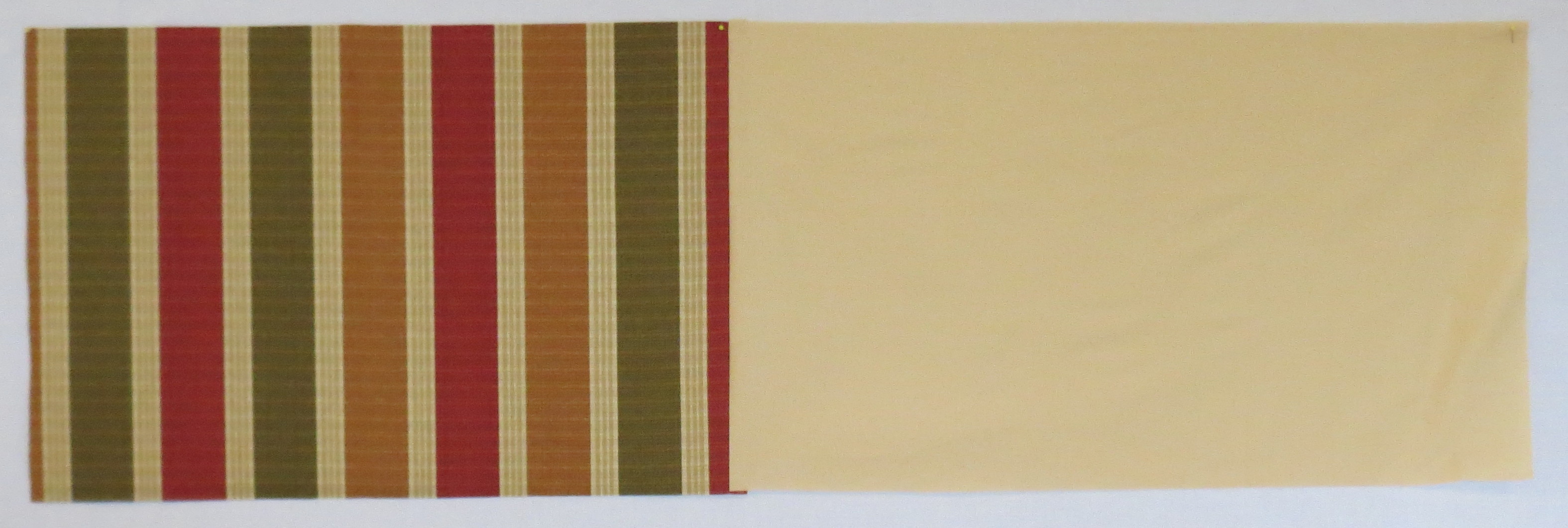
Sew outer and lining pieces together end to end

Sew outer and lining pieces together end to end

Pin the strap to the quiver outer fabric along one edge.  The upper end of the strap should be about 3 inches from the outer fabric/lining joining seam. Make the strap perpendicular to the raw edge at the top and either perpendicular or at an angle at the other strap end about 12-20 inches lower.  Leave enough of a loop in the strap so it will be comfortable to sling over your shoulder for carrying.  You want the strap to be mostly in the upper half of the quiver.  Machine baste both ends of the strap in place.

Fold the quiver in half the long way, right sides together.  Because the fusible interfacing is so stiff, you will have to force a fold in it. Tuck the strap inside so it won’t get caught in the stitching. Sew the outer fabric end closed and sew the long edge closed, but leave the lining end open for turning as shown below.  Reinforce the seam over the straps with an extra line of stitching.

Fold in half and sew along the outer fabric narrow end and all along the long side.  Leave lining end open.

Fold in half and sew along the outer fabric narrow end and all along the long side. Leave lining end open.

Open  the bottom out and sew across to make a couple of “ears” as shown below.  The seam to make each ear will be about 3 inches long, so the bag will be roughly circular at the bottom.
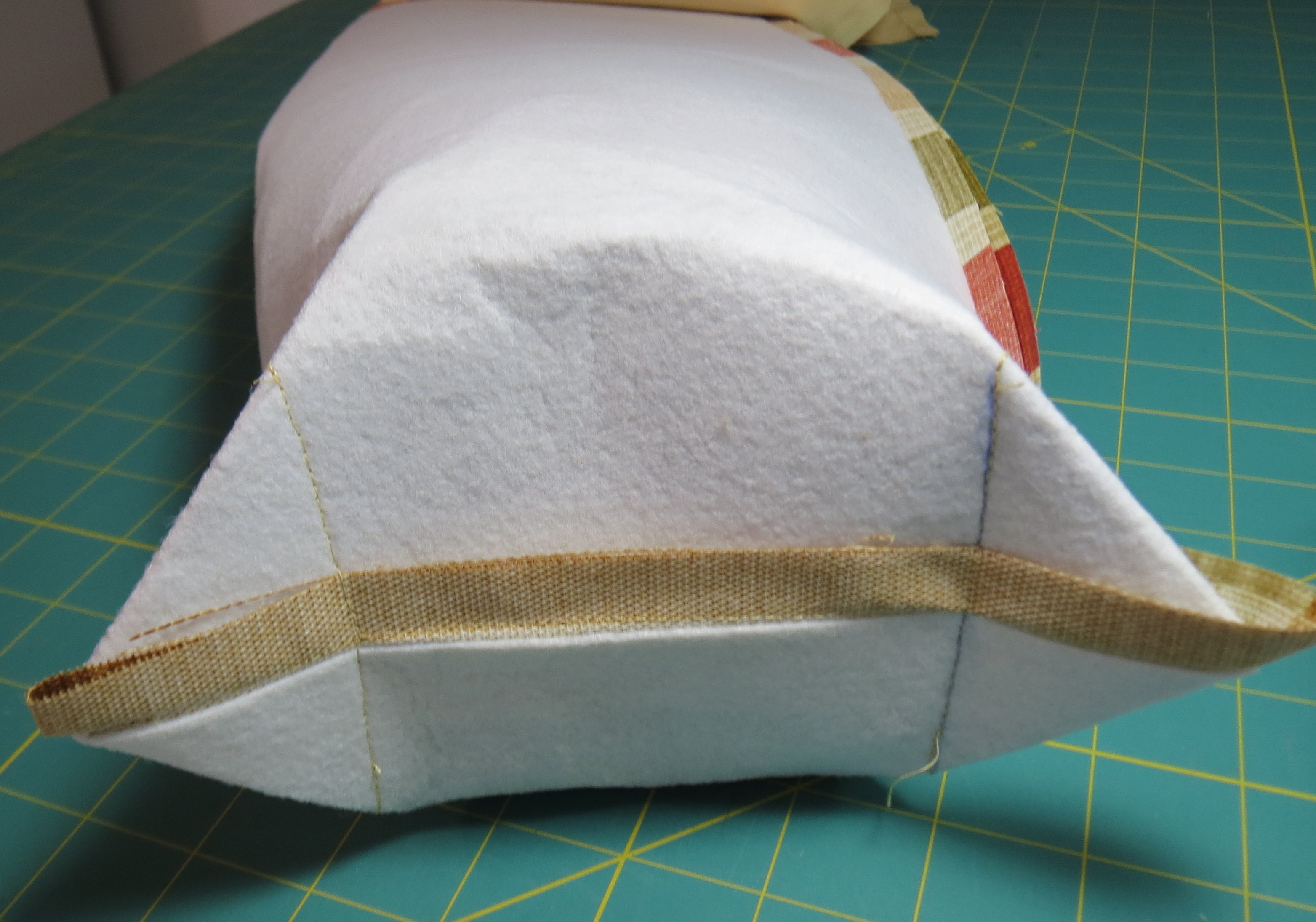
Round out the bottom of the quiver by sewing two "ears" as shown.

Round out the bottom of the quiver by sewing two “ears” as shown.

Turn the bag right side out through the opening in the lining.  This is a little tough because of the stiff interfacing.  I managed this with my 40 inch long quiver, but I wouldn’t want to try one much longer than that.  The shorter quiver was a lot easier to turn.  The right side out bag, with lining still outside, is shown below.

Quiver turned right side out

Quiver turned right side out

Fold under ½ inch of the raw edge at the end of the lining and sew across to close the opening.  Then push the lining down into the quiver.  Use a stick or round rod to get it to the bottom.  Roll the excess lining length over the top of the quiver to form a cuff.  Sew down the edge of the cuff as shown below.
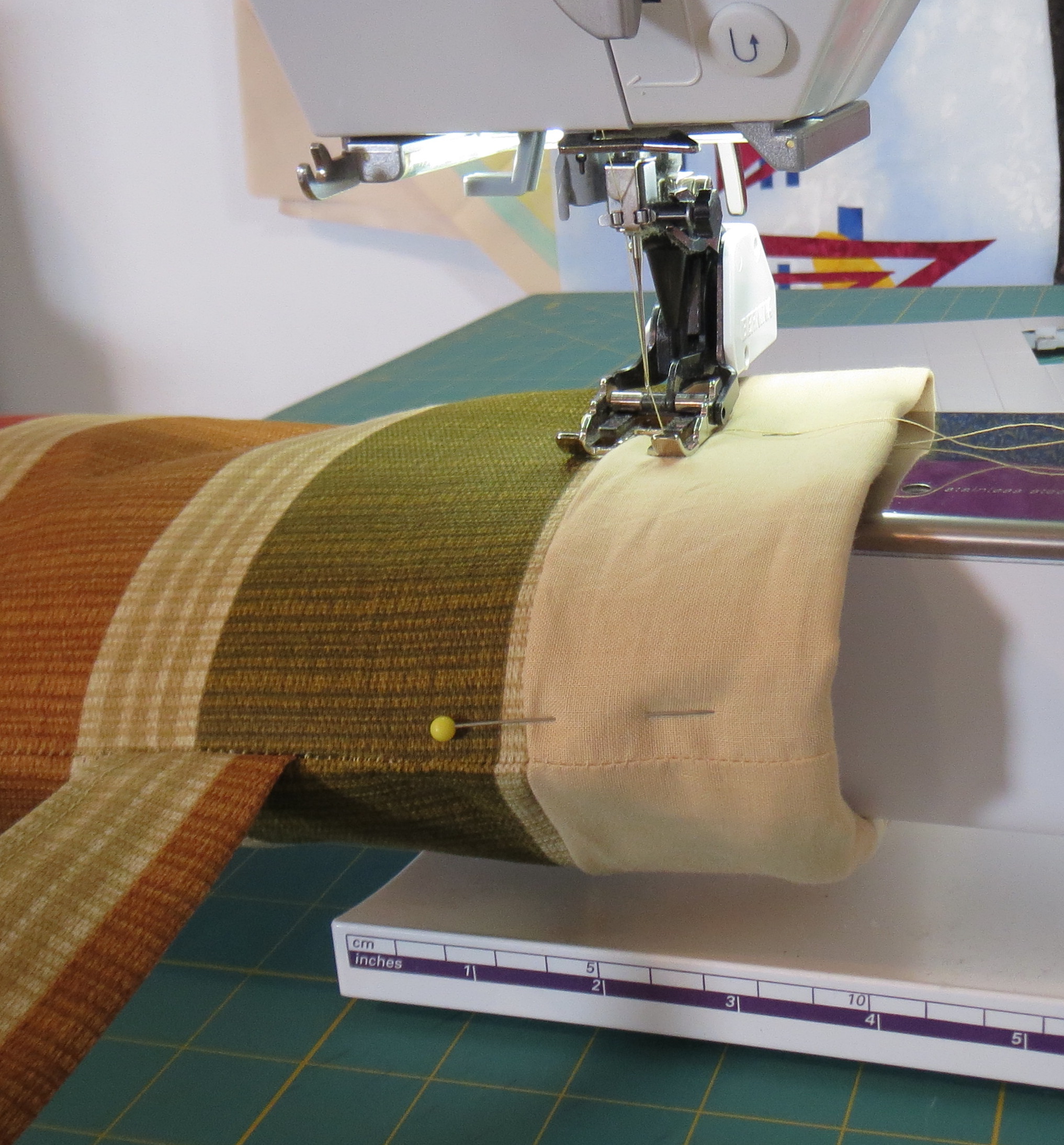
Quiver top cuff seam

Quiver top cuff seam

Your quiver is complete:
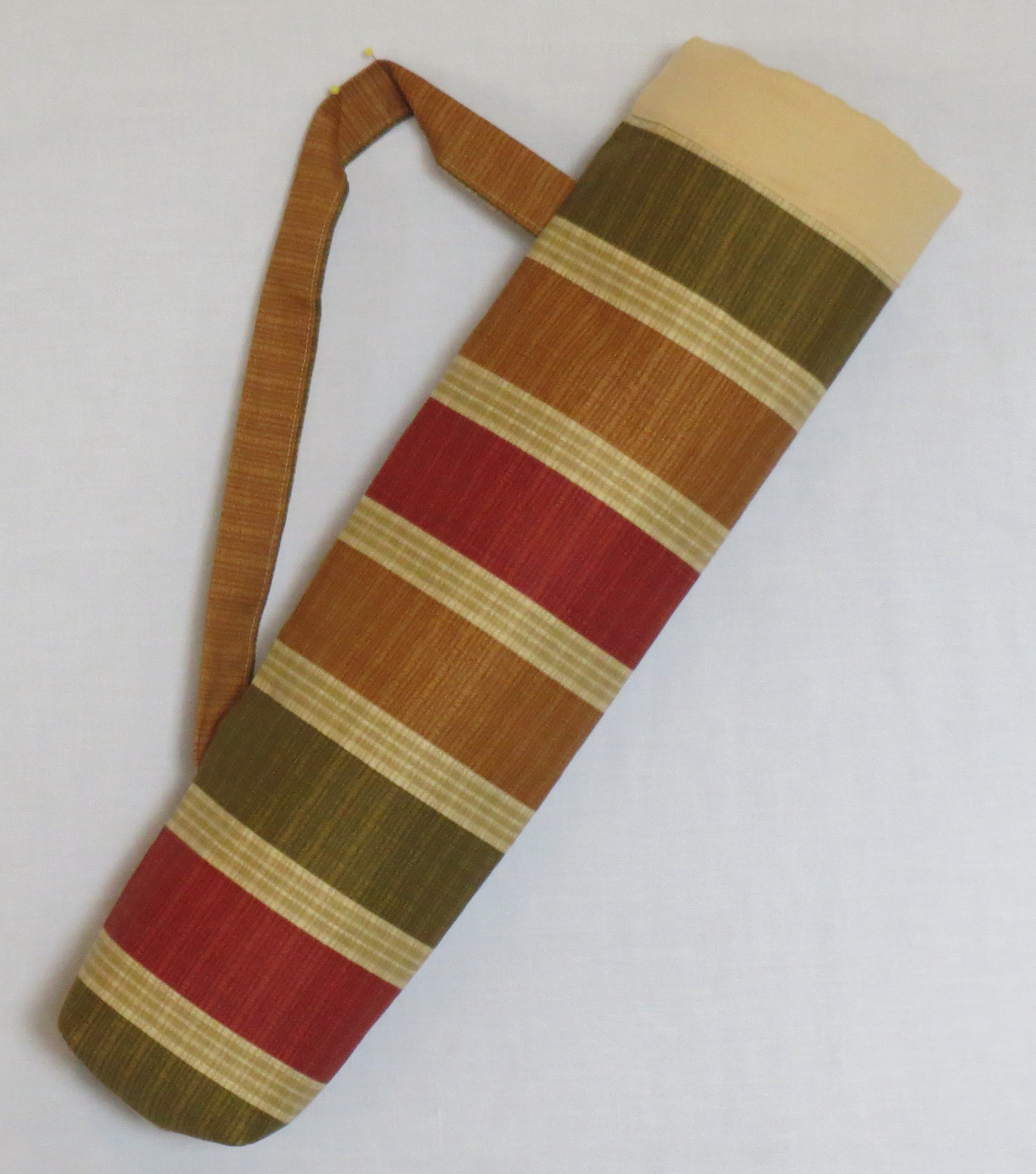
A completed quilt stick quiver
A completed quilt stick quiver

Tropical Flowers and Sashiko will be in the Pacific West Quilt Show

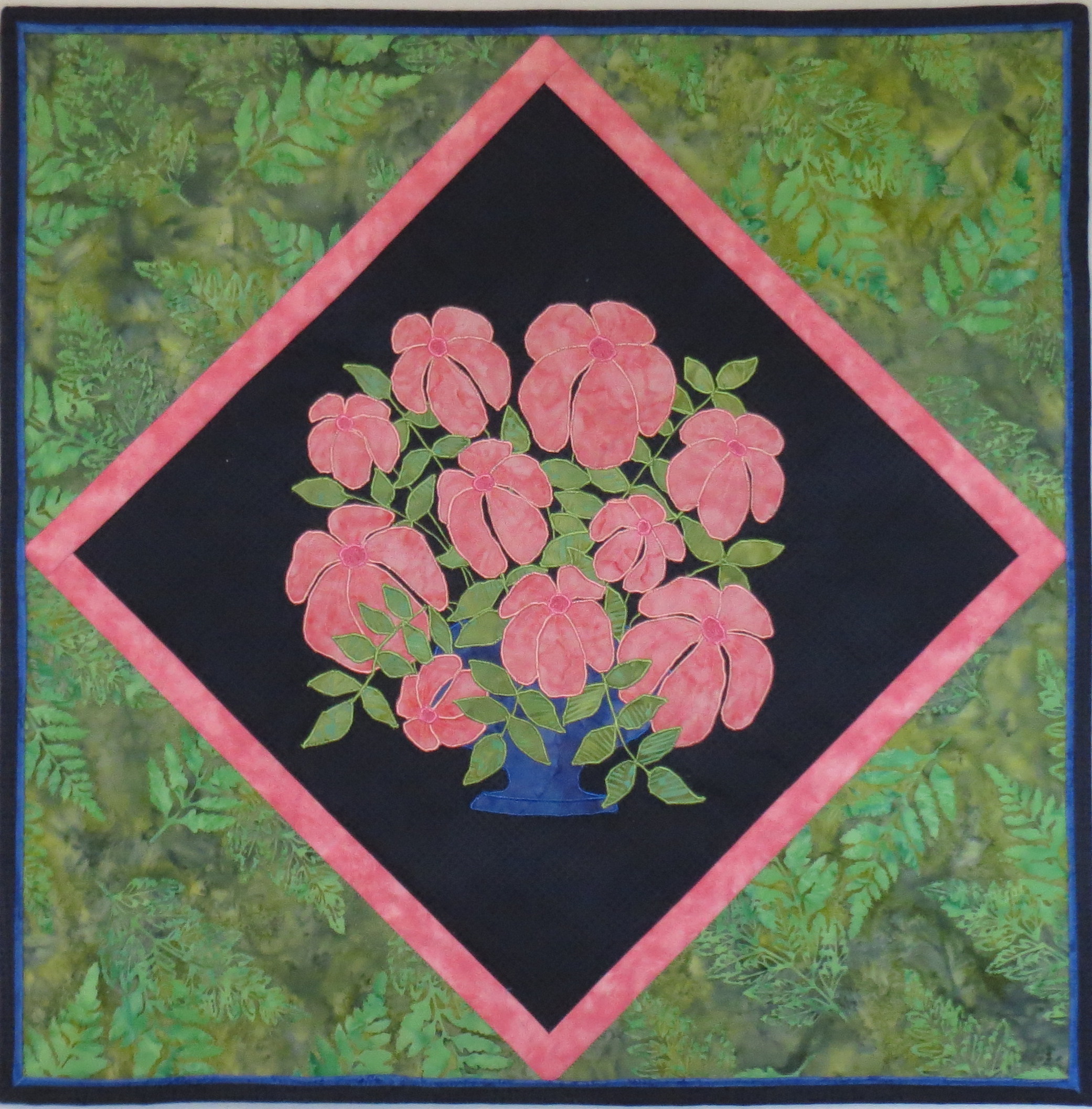
I was just notified that my quilt “Tropical Flowers and Sashiko” wll be included in a special member’s exhibit at the Pacific West Quilt Show in Tacoma August 23-25, 2013.  All the quilts in the exhibit have a floral theme.  It is one of three special member’s exhibits in the lower exhibit hall, separate from the juried show upstairs.  This quilt is made from a pattern by Sylvia Pippen and was a joy to make.

Those of you who have attended the PW show in the past know that the numerous special exhibits in the lower hall are wonderful.  I always enjoy that part of the show, so when the opportunity to participate came up last month, I quickly sent in an application and photos of my quilt.  You can see a photo of the quilt on my gallery page — it’s the last quilt shown.

As I posted earlier, my quilts “Fireballs” and “Leaves In The Wind” were accepted into the juried show, so they will be in the upstairs exhibit hall.

Hope to see you at the show!

“Meet the Author” event at Silverdale Quality Sew and Vac

I am pleased to announce that the Quality Sewing and Vacuum store in Silverdale, in addition to offering several of my classes this fall, has asked me to present a “Meet the Author” event at the store August 7, 2013 from 10:00 am to 12 noon.   I will present a trunk show of quilts and talk about the inspiration behind the quilts, plus briefly demonstrate some binding and quilting techniques that are included in my classes.  If you are curious about the classes but not sure they are right for you, this is a good opportunity to get more information.

There will be lots of time to ask questions, and to sign books for those who are interested.  I will be offering several books and patterns as door prizes, and the store will offer refreshments.  Contact the store directly to reserve a spot or ask any questions about the event.

Quality Sewing and Vacuum  10876 Myhre Place NW, Silverdale 98383

Phone: 360-692-2992.  web site:  www.qualitysewing.com

Free Quilt Patterns Available

I am pleased to announce that I have uploaded fourteen FREE quilt patterns to my PatternSpot store.  These patterns are very simple ones, first developed some years ago for use by my guild for charity quilts.  Because the calculations are already done for yardage and cutting requirements, you can get a running start on quilt construction with these patterns.

Check out my Patterns page (scroll to the bottom) and you will see thumbnail pictures of each free pattern.  I hope you will find them useful!

Quilting with a Walking Foot

Recently I posted a photo of my new shop sample for my Free Motion Quilting class. I am making two similar shop samples, so I can have them up in more than one shop at a time.

In the meantime, I have decided to create new shop samples for my Beginning Quilting With a Walking Foot class. I began thinking about how to design an effective shop sample that would be the basis of a reworked class (again, so students go home with a sampler using a number of WF quilting patterns/techniques).

I did an internet search for “quilting with a walking foot” and quickly found a great link: http://blog.petitdesignco.com/2012/10/31-days-of-walking-foot-quilting.html

In her 31 days of quilting with a walking foot, Norma of Petit Design Co. covers in great detail how to use a walking foot and shows a wide variety of patterns. I have bookmarked her blog and plan to spend more time reading it thoroughly. For those of you who don’t do free motion quilting for whatever reason, this site gives you great suggestions for WF quilting.

Floating Mode for Free Motion on some sewing machines

Several times recently when I have taught my free motion quilting class, I have had students arrive with what (to me) was the wrong presser foot for their machines. I finally went to Quality Sew and Vac and started asking questions, since these students all said they were told by Quality that the foot they brought to class was the right one for free motion.

Lynn Cassidy at Silverdale Quality S&V solved the mystery. Certain models of Viking and Pfaff have a “floating” free motion mode in addition to a “spring action” free motion mode. The machines must be set to operate in one mode or the other, depending upon which presser foot you use. So it is possible to do free motion without a foot with a spring in it, which is the only way I have ever done it.

Here is a link to an explanation by Viking of the Floating Mode:

http://new.husqvarnaviking.com/en-CA/Accessories/Free-Motion-Echo-Quilting-Foot

and a similar link for Spring Action:

http://new.husqvarnaviking.com/en-US/Accessories/Open-Toe-Free-Motion-Spring-Foot

Thanks to Lynn for her great explanation of this option available on some sewing machines. Now I will be better able to help my quilting students in the future.

Free Motion Quilting Class Update

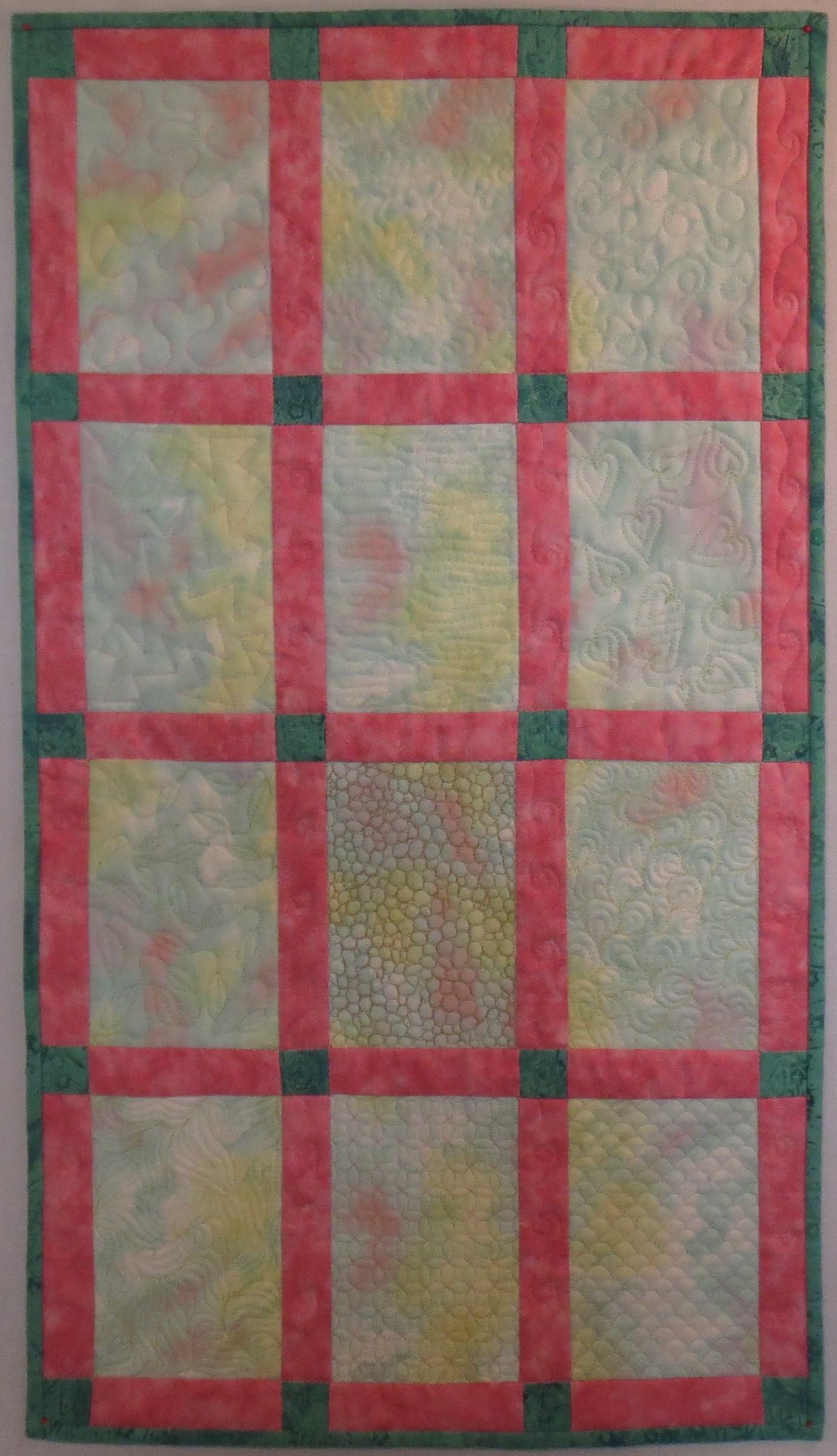
After I taught my last free motion quilting class, I decided I needed to rework the class a little bit to improve its effectiveness. I also needed new shop samples. The photo below shows my first new shop sample, which includes thirteen different free motion designs (twelve blocks plus one in the sashing). By focusing the class so that each student tries these thirteen designs, I am hoping students will have a clear goal and feel they have enough designs to use on their quilts until they gain the confidence to create their own. You can click on the photo and enlarge it to see the designs. On my computer I can then zoom in even further so the quilting patterns really show.

Free Motion Quilting Class Sampler

Free Motion Quilting Class Sampler

Pieceless Applique Shop Samples

I will be teaching my Pieceless Applique class at Sleepy Valley Quilt Company in Port Angeles in September and have been preparing a couple of samples for display in the shop. The first sample is using a block from Liz Jones’ book, Flowers, Hearts and Garlands:

Pieceless Applique Peach Floral sample

Pieceless Applique Peach Floral sample

The second sample is one I prepared using a simpler design that is more suitable for the students as a practice piece:

Pieceless applique four patch sample June 17 2013

I really love the book by Liz Jones where I learned this technique.  The applique patterns are really beautiful.  Click on the book name here to see  more details about the book on Amazon: Flowers, Hearts and Garlands Quilt (Applique Masterpiece)

A new way to label your quilts

I just saw this on an Episode of The Quilt Show and it is a really great idea, so I am sharing it here. You know those little square black and white codes that you are seeing everywhere in magazines, on store ads, etc? You can now put one on your quilt, in a scrapbook, or in a greeting card!

It’s called a QR code (abbreviated from Quick Response Code) and is an optically machine-readable label that is attached to an item and that records information related to that item. For your quilt, it can be an audio message, a video message, a photo, or text.

Go to http://www.stkr.it for more info. You can get an iron on or a sew in QR label to apply to your quilt. You can upload or record your message with your smart phone (and their free app) and then it can be read by anyone with a smart phone. It can also be accessed by taking the number on the label and going to the stkr.it website, where you can enter the number and get access to the message that way.

If you are a member of The Quilt Show, they have a video showing use of the product taken at the recent Quilt Market in Portland.

Garden Tiles Pattern now available

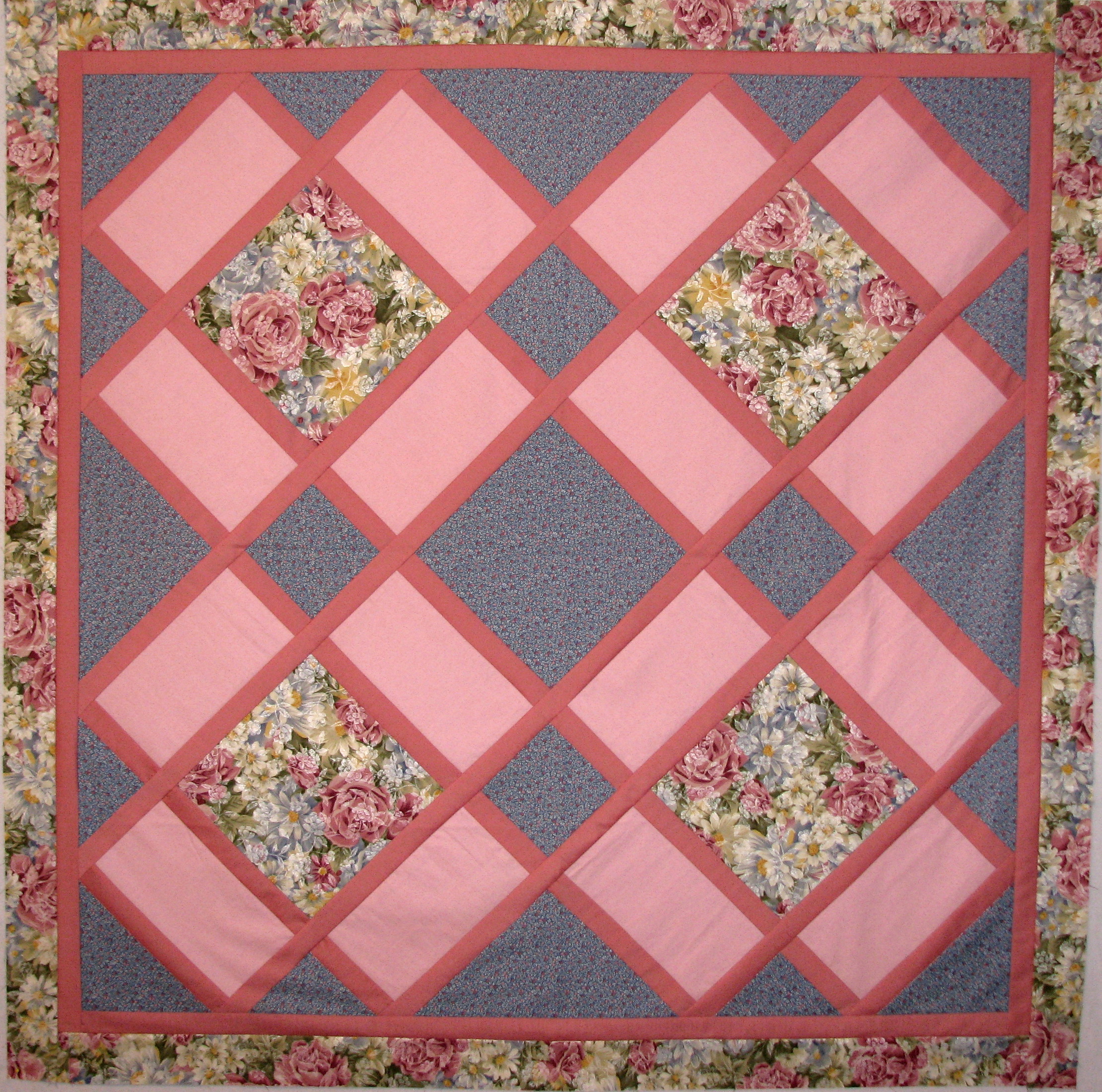
Garden tiles quilt in pinks and blues

My super simple but dramatic Garden Tiles quilt, made from my guild’s charity quilt fabric stash

I am pleased to announce that I have my first quilt pattern available for download at Pattern Spot. The link to get to my pattern shop there is on my Pattern Page (see buttons above the banner photo on this page).  On that page I also show another version of the quilt.

I am offering the pattern for free to  the first two quilters who volunteer to test it in the next couple of months and tell me about any problems they have with the pattern.  Also, I am not very excited about the name.  I will also give a free pattern to the person who comes up with a name I like better than Garden Tiles.  For either of these offers, just email me at shirley@mysterybayquiltdesign.com .

If you read my earlier postings, you saw some earlier versions of this quilt under the title “Quilt Pattern Tune-up”.  I plan to complete the Garden Windows version of this quilt as a pattern also.