I have worked with the local shops where I teach and finalized the 2014 spring teaching schedule. I will be teaching at Creative Union, Karen’s Quilt Shop, Kingston Quilt Shop, and Quality Sewing and Vacuum. See the calendar page for specifics on the classes, and contact the stores directly to sign up for a class.
Category Archives: Quilting
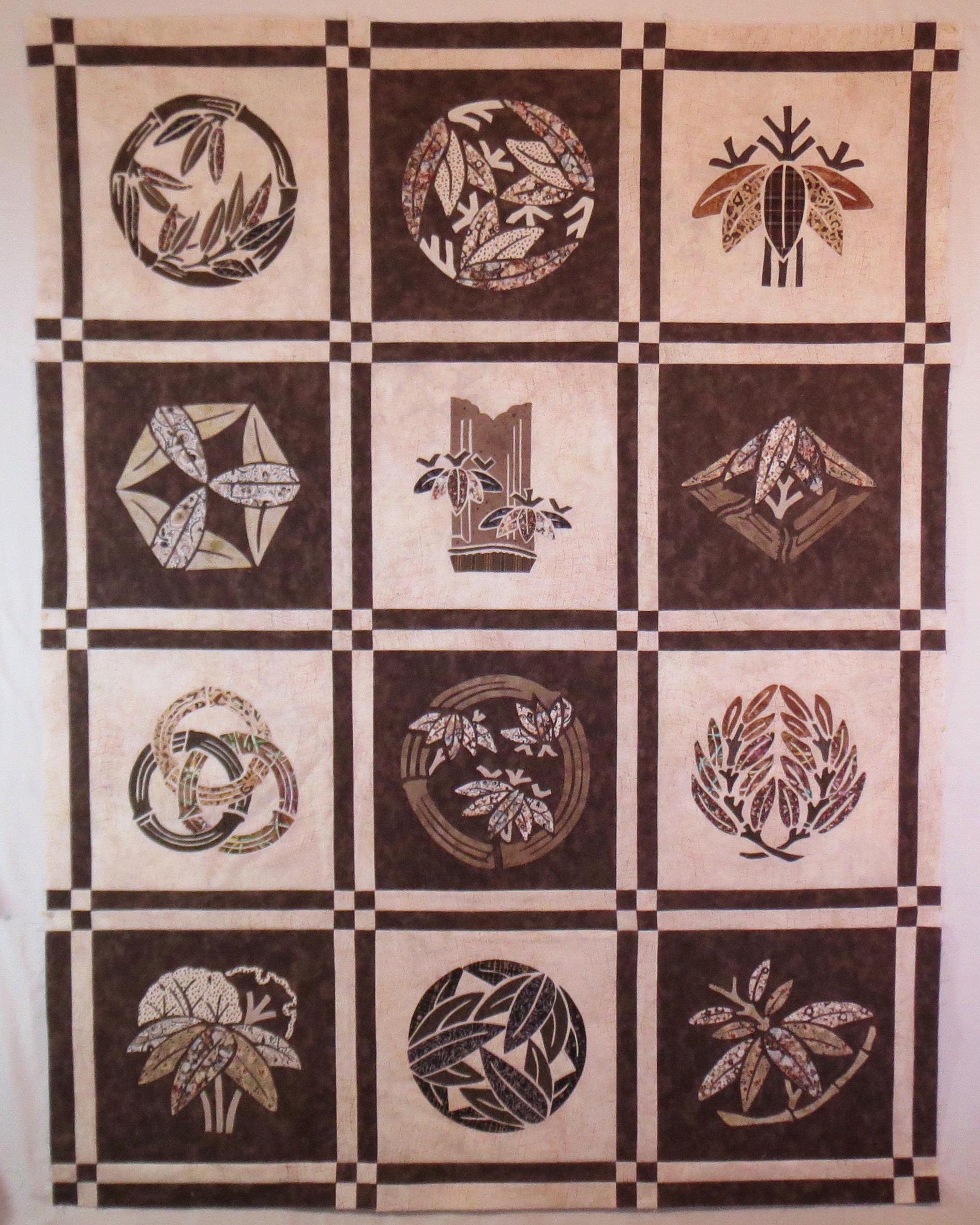
Japanese family crest quilt top finished!
Machine Applique with silk thread
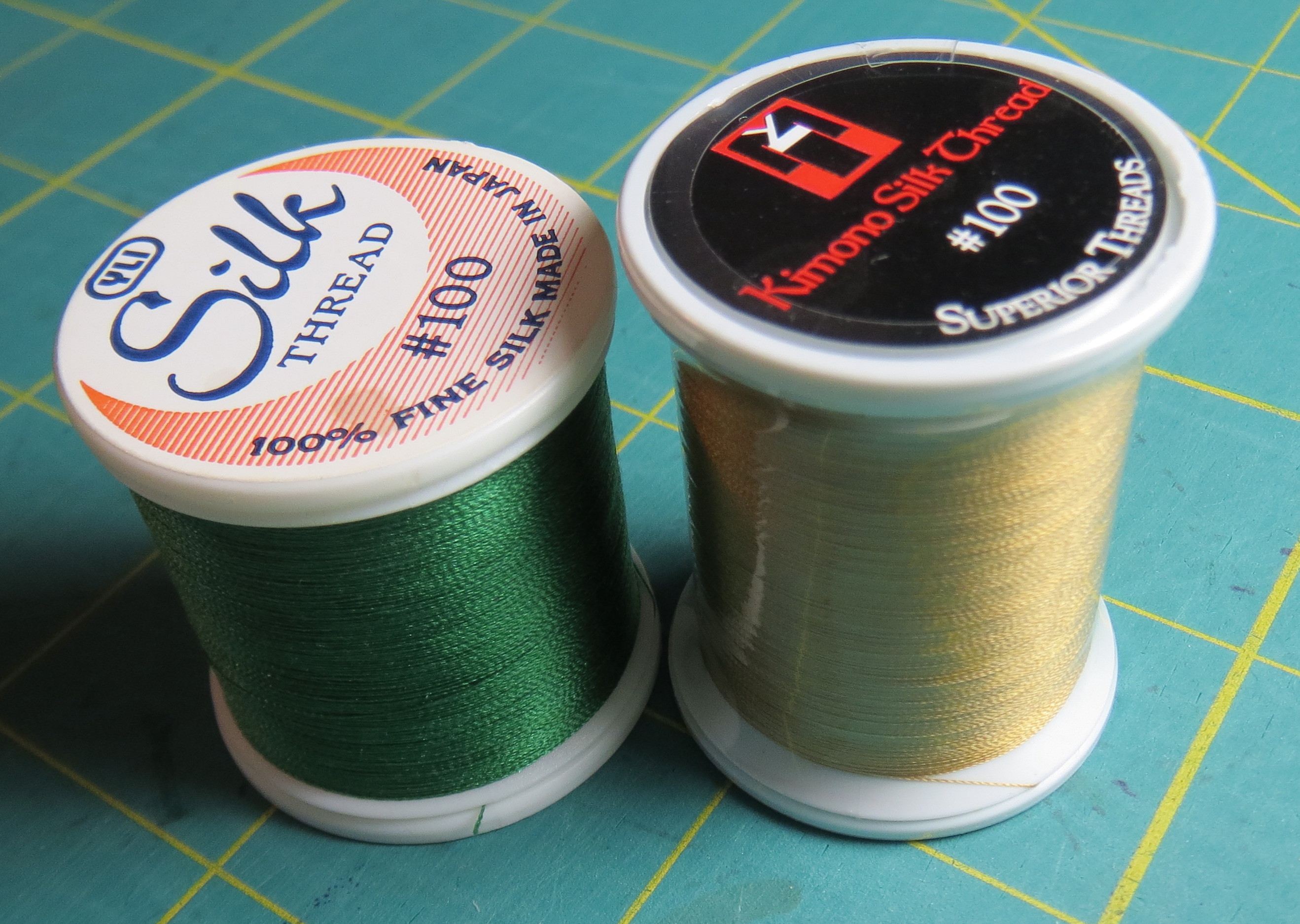
I am still working on my Japanese Kamon (family crest) blocks. Right now I am stitching around the edges of the fused applique pieces – since I never trust the fusible to be permanent. For these pieces, I want the stitching to blend into the fabric as much as possible. I use size 100 silk thread for this purpose, since it is very fine. I use silk thread made by YLI and also by Superior Threads. Your local quilt shop may carry this thread for use in hand applique, or you may have to buy it on line. The YLI version can be purchased through Amazon (like almost anything else you could want!) at this link: Silk Thread 100 Weight 200 Meters-
Polyester size 100 thread is also available, but I prefer the silk. The photo below shows a couple of spools of this thread. Note the number 100 on the top of each spool.
I iron a piece of Totally Stable (by Sulky) on the back of my block. Totally Stable irons on like freezer paper, but is tearaway so it can be removed reasonably easily. Other stabilizers or even newsprint could be used but would have to be pinned in place. You may also just use starch or sizing on the back of the block to stiffen it up; for the blanket stitching I am using here, that would probably be enough to keep the fabric from puckering. I may try that on a couple of blocks and see if I can recommend it, since it would eliminate the tearaway step. But today I am using the Totally Stable. Incidentally, Totally Stable comes in various sizes – 8 1/2 by 11 sheets, 8, 12, or 20 inch wide rolls, etc. I think the 12 inch wide roll is probably the most convenient for most quilters, and you can buy it at your local quilting/craft store or here at Amazon: Sulky 12-Inch by 12-Yard Totally Stable Iron-On Tear-Away Stabilizer Roll
After the Totally Stable is in place, thread your machine with size 100 silk in both the top and bobbin. Check the tension – I like a setting of about 2 for my Bernina, but your machine may be different. The bobbin thread should not show on the top if the tension is correct.
I set the stitch length to 1.5 and the stitch width to about 0.7. I am using the built in blanket stitch (stitch 329 on my Bernina 180). I like a pretty narrow stitch so it doesn’t show much. The resulting stitch shows below on the lower leaf of this block; the other leaf hasn’t been stitched yet. In this closeup view you can see the stitching. From a little further away, it is nearly invisible.
I think this method is a good compromise. The stitching is inconspicuous and it is fairly fast, so I will make reasonable progress. If I try a block without the Totally Stable, I will report here how that went.
Completion of “Negative Space” quilts
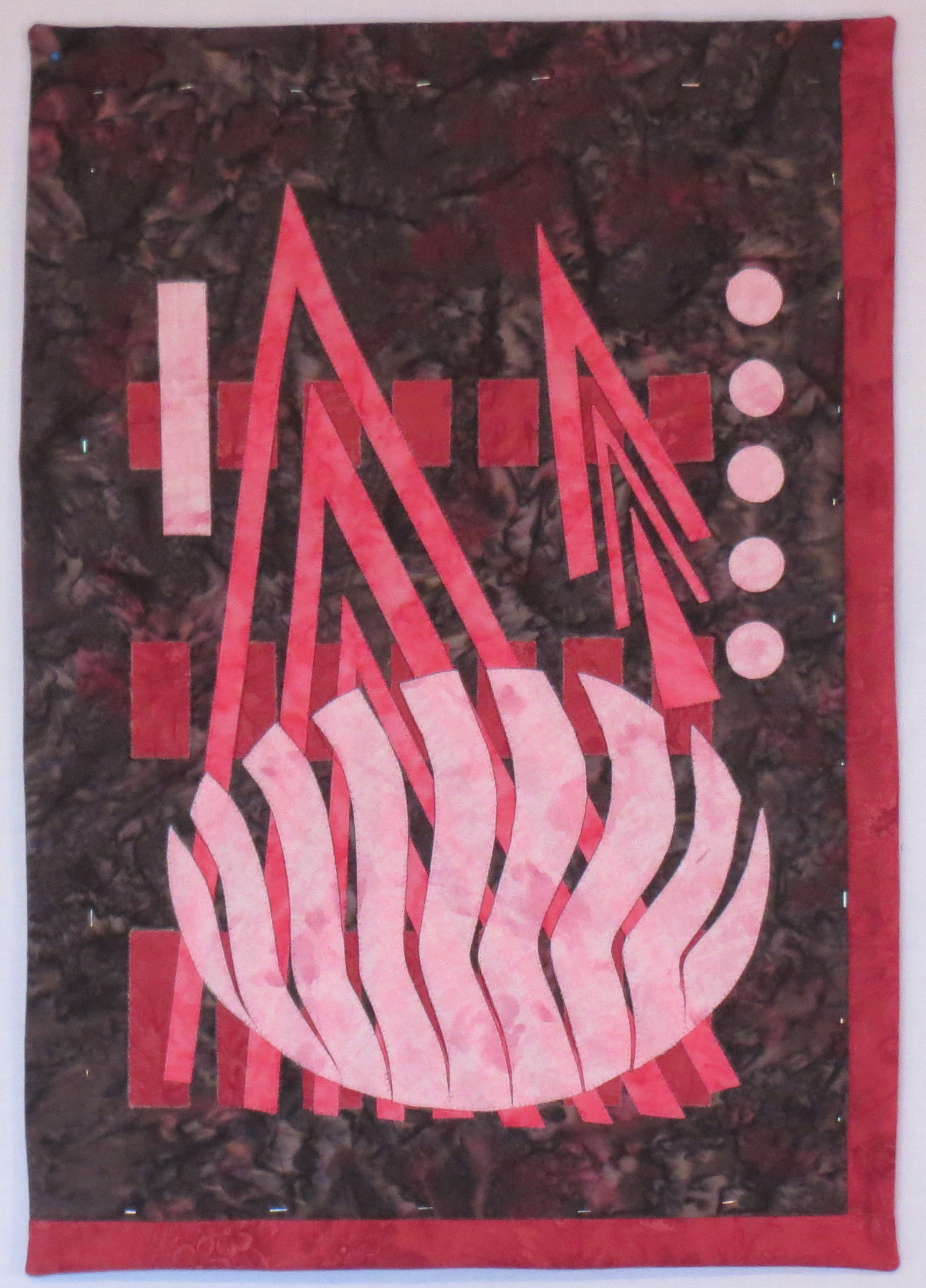
Last spring I took an online art quilt class at Quilt University from Marilyn Belford (www.marilynbelford.com) . I posted photos of some of my class homework at the time. I have finally completed several of these class projects and am including photos here. All of these projects were done on fusible web. As a reminder, each project started with a large shape such as a circle, triangle, or rectangle being cut out of one fabric (with fusible web attached). Then that large shape was fractured into a bunch of smaller shapes, which were then “stretched out” on top of a second fabric and fused down. For the later exercises, shapes were cut from more than one fabric.
I did a lot of these exercises in the class and I still have three more to finish. In all cases, the little quilts were completely finished from my fabric stash. For the finished projects shown here, most of the pieces were machine appliqued using a fine thread and a small blanket stitch.
And now the quilts. This first one has “fractured” triangles and other assorted shapes:
And the next one has a fractured circle and fractured triangles:
And now one where the assignment was to think of a feeling and express it using simple shapes. The feeling I used was feeling “unbalanced”:
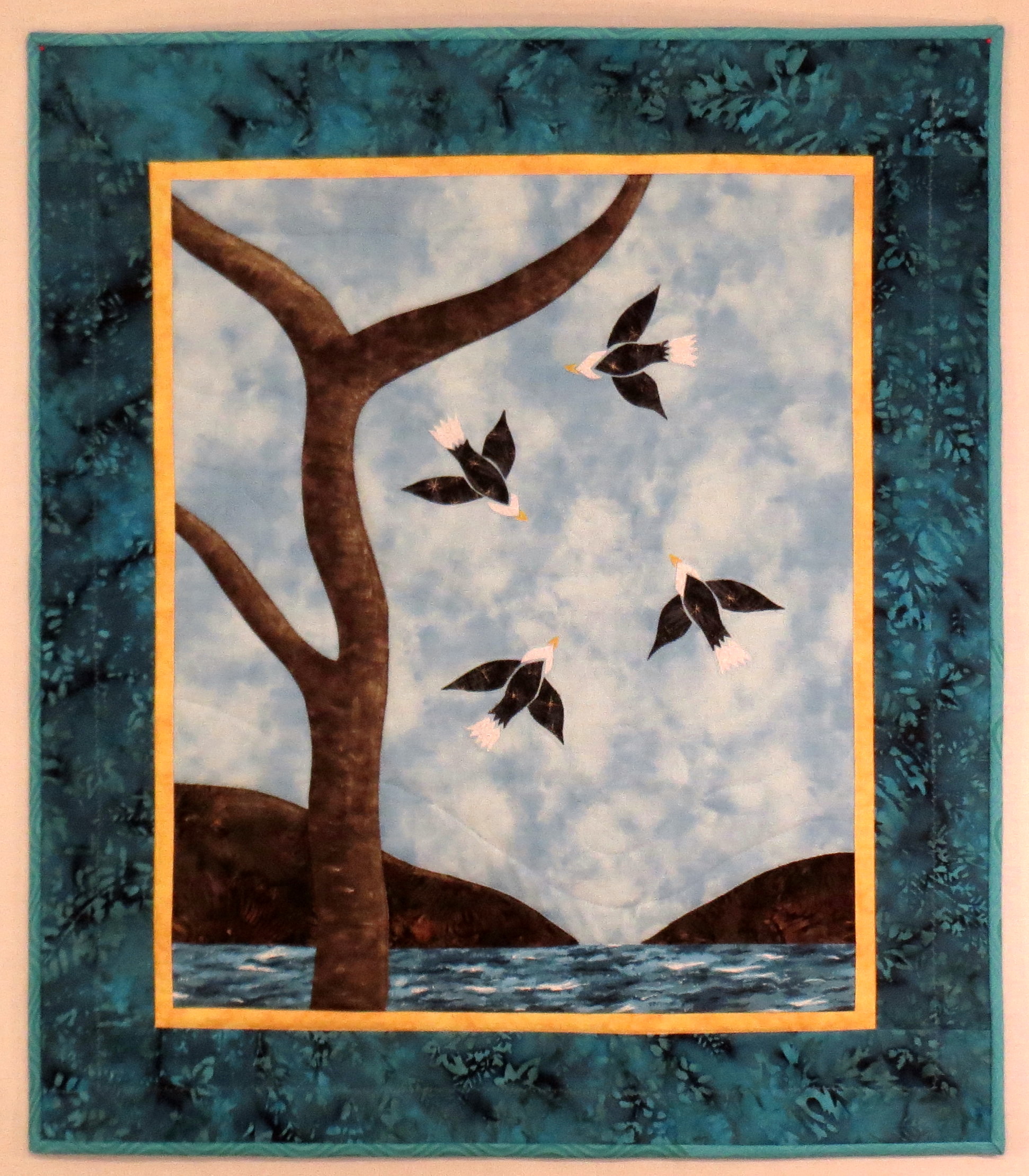
And the last one was an experiment (I don’t think this was actually a class assignment, but I could be wrong) where I decided to try simplifying an animal shape while retaining the “essence” of the animal so that it would be recognizable. I used bald eagles because they are so recognizable and also because they roost in our trees here and we often see them performing acrobatics in the sky.
I used a gold metallic Shiva Paintstik to add some dimension and shading to the tree. It worked fairly well considering my lack of painting experience. The one negative is I can still smell the paint on the quilt — but then it has only been two days, so perhaps it will go away with time.
I really like these little abstract quilts. The question is, what do I do with them now? I don’t believe they are very marketable. My cousin, who is an abstract painter, tells me that abstract art is a tough sell: 90 % of all people aren’t much interested in art; of the remaining 10 % who do like art, 90 % aren’t interested in abstract art. So selling a good landscape painting (or quilt) is going to be a lot easier than selling abstract art quilts. Good thing I don’t have to make a living with my quilts!
Free Motion Quilting Patterns for Modern Quilts
Often students in my quilting classes ask about how to decide what quilting patterns to use for a particular quilt. I have been thinking about how I decide to use particular patterns and how I can better answer the question. I don’t have any great answers yet, but I’m still working on it!
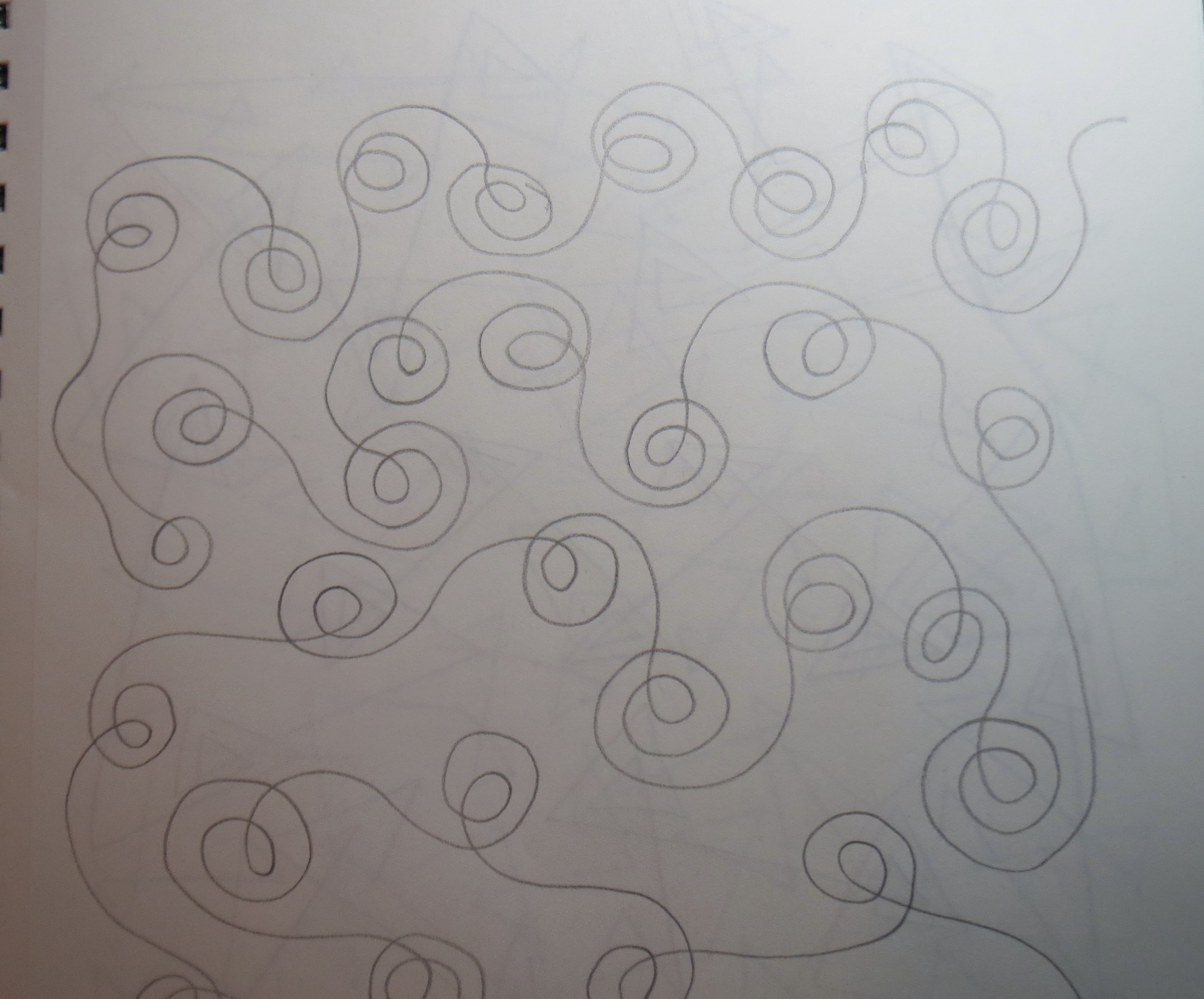
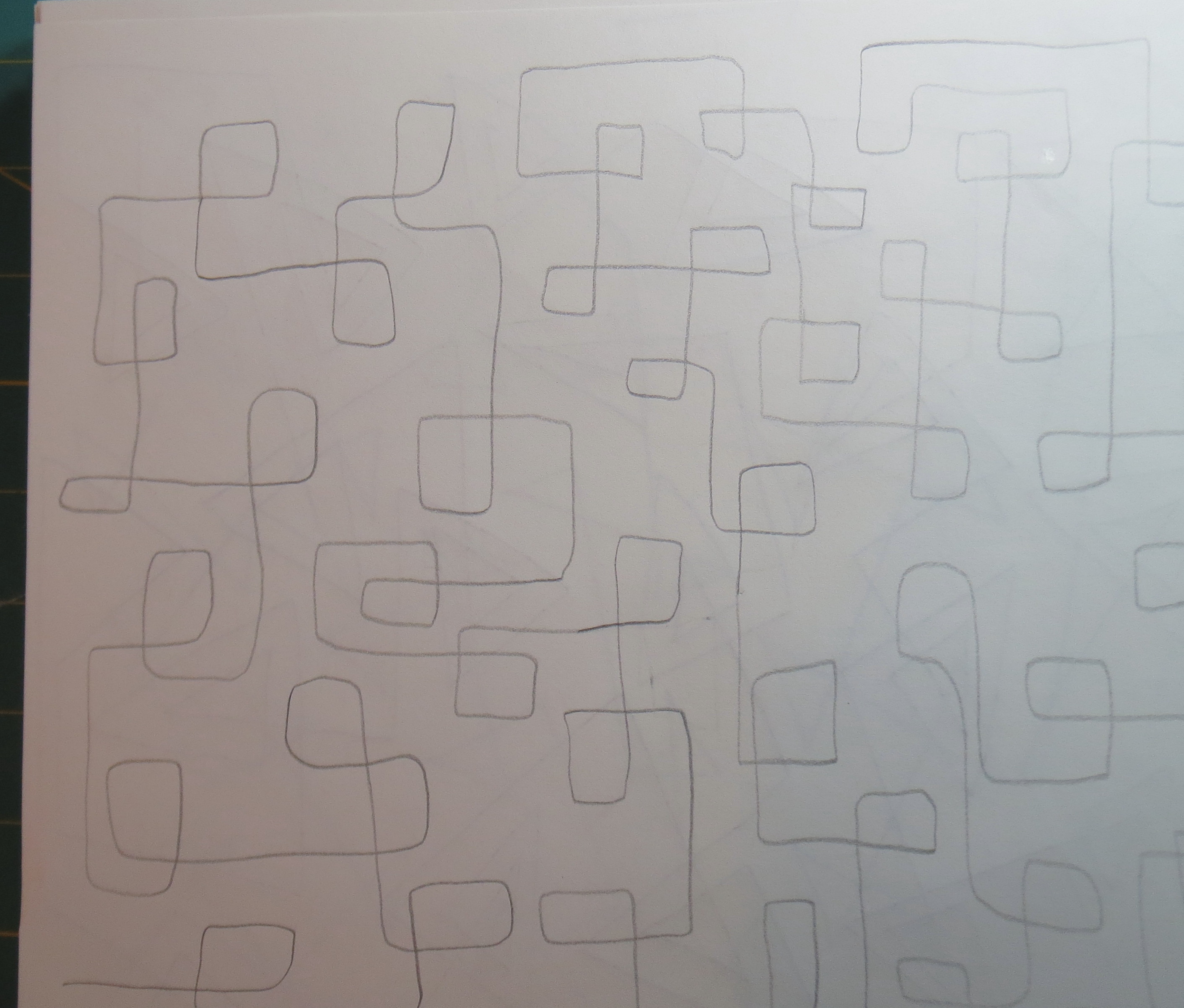
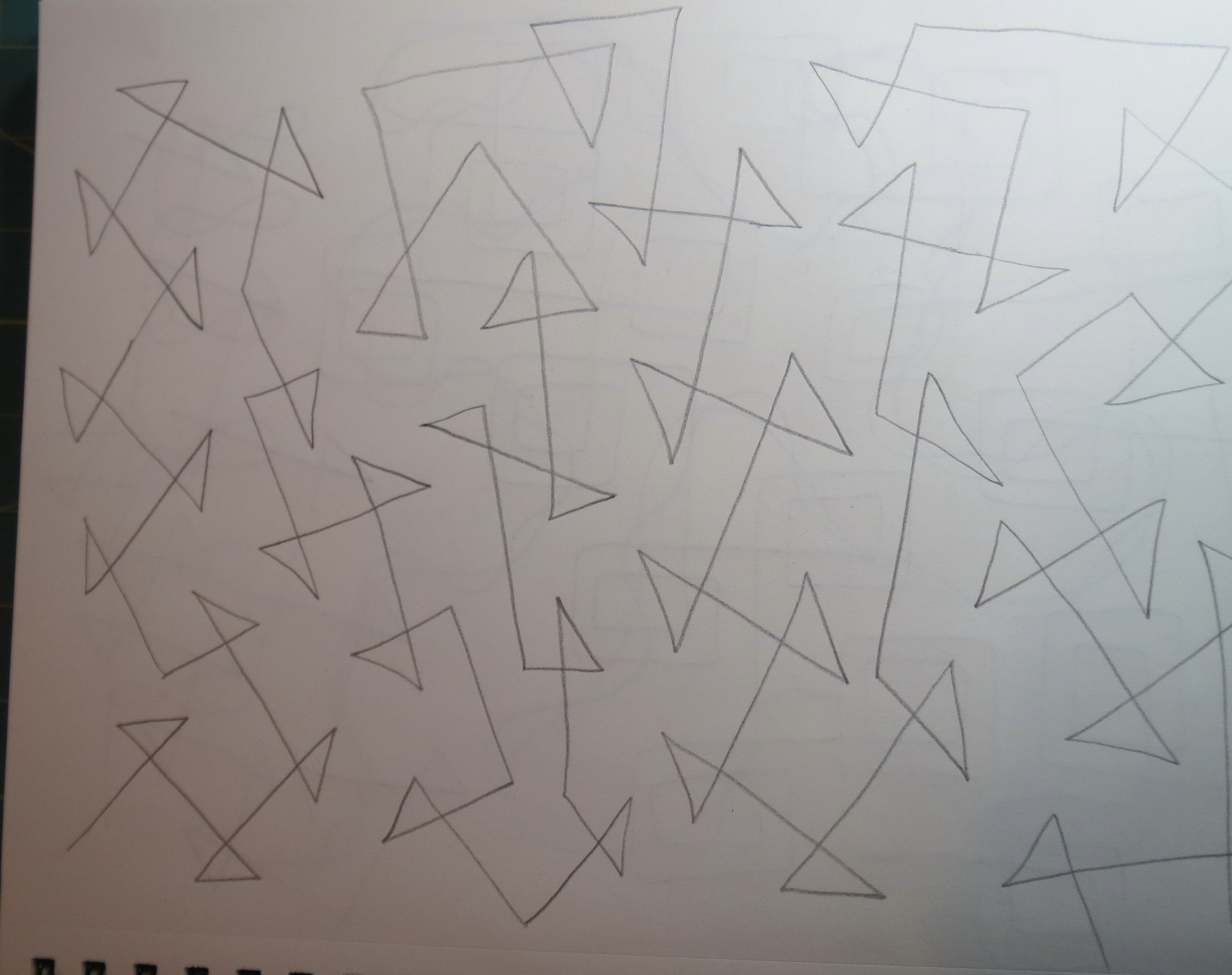
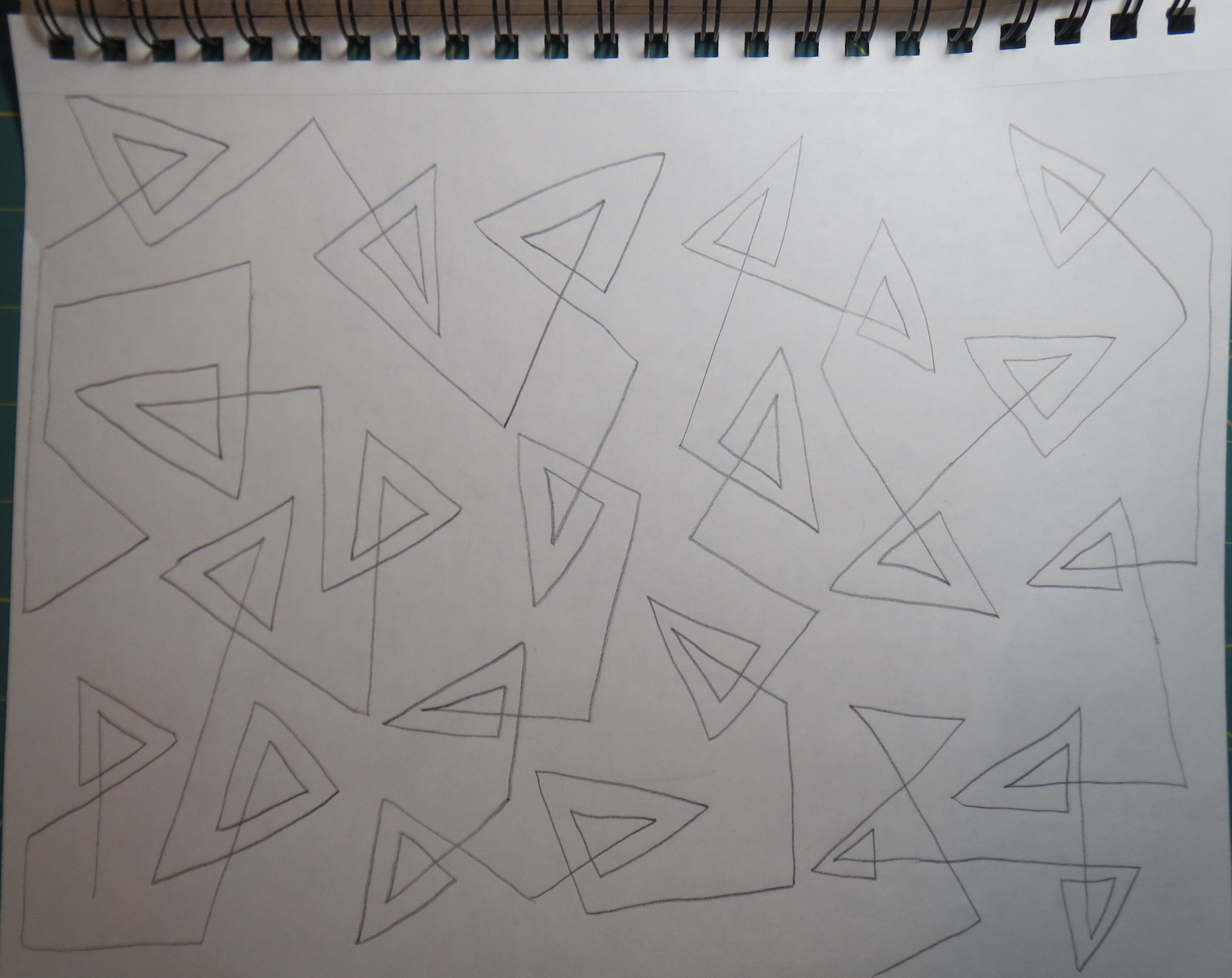
Recently I visited Pacific Fabrics in East Bremerton. It happened that my visit coincided with their (free) monthly craft presentation presented by Chris Groce. I have seen a couple of her presentations before – they are always fast paced and packed with ideas using the latest products and patterns Pacific Fabrics has in their stores. I decided to stay and listen. A number of the products and patterns she featured were related to “Modern Quilting”. The presentation made me think of the need for free motion quilting patterns that fit well with modern quilts. I quickly sketched a few ideas on one of the handouts. I can’t remember if these ideas came from actual quilting on some of the projects she showed, or if they came from the prints on the fabrics. I just remember wanting to draw the basic forms so I wouldn’t forget. Here are my initial sketches:
I sketched bigger versions of these in my sketchbook and then stitched some of them out this morning. I think I will be able to make these even better with more practice, but they aren’t bad for first tries.
Here is a double loop pattern, as sketched out and then stitched out.
And now the rounded squares.
And finally, triangles. I sketched several versions of these before I finally stitched out the large double triangles.
These patterns were pretty quick to stitch and add nicely to my “library” of free motion patterns. Do try them out!
Making Quilting Templates
I am making some quilting templates out of template plastic so thought I would explain the process. First, there are several different kinds of template plastic. For applique templates where you will want to press the fabric around the template, be sure to get the heat resistant template plastic. For marking your quilting patterns, the heat resistant plastic is not necessary although it certainly can be used. The regular plastic comes as a clear sheet. a gridded sheet, or occasionally in color (quilt shops usually stock the 12 by 18 inch size, although other sizes are available). I purchased some recently at Pacific Fabrics in Bremerton; here are the two types I purchased.
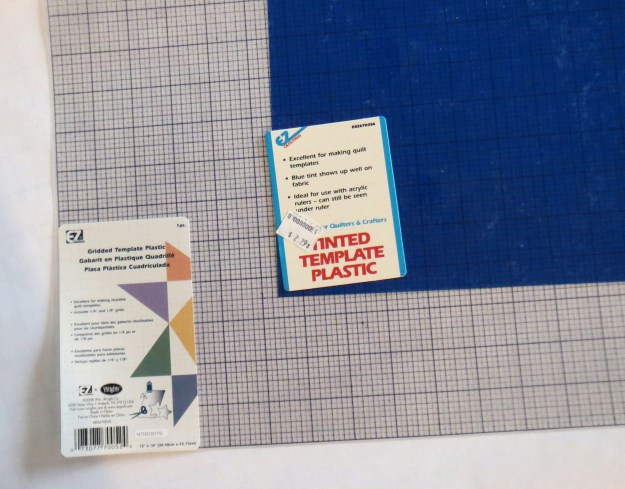
Both the colored and the gridded plastic have the advantage that you can find them when they get buried in your studio. Clear templates can be hard to locate, especially once they are cut up into small pieces. The gridded ones are also convenient for drawing shapes. Below I am going to show how to make a couple of patterns that I like and use in my walking foot quilting class.
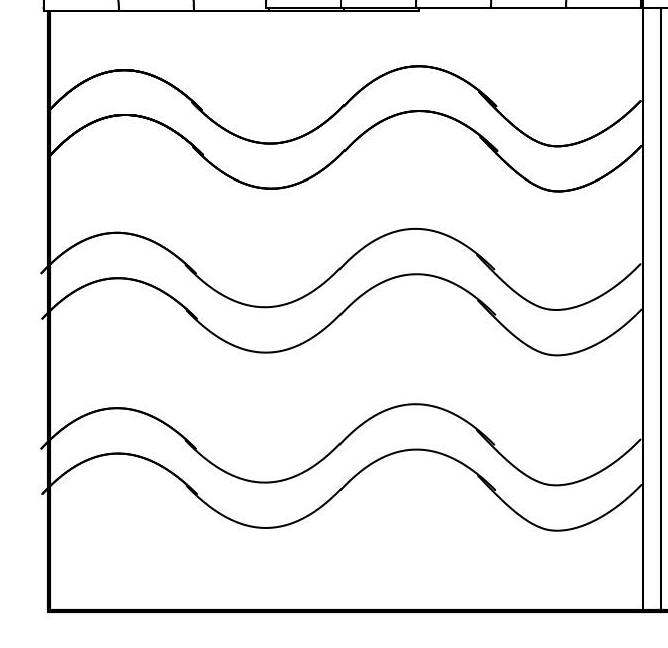
First, a “wavy line” template. I like this wavy line quilting as a background for contemporary quilts. It can be easily sewn using a walking foot. Here is the 8 inch square pattern we use in the class sampler:
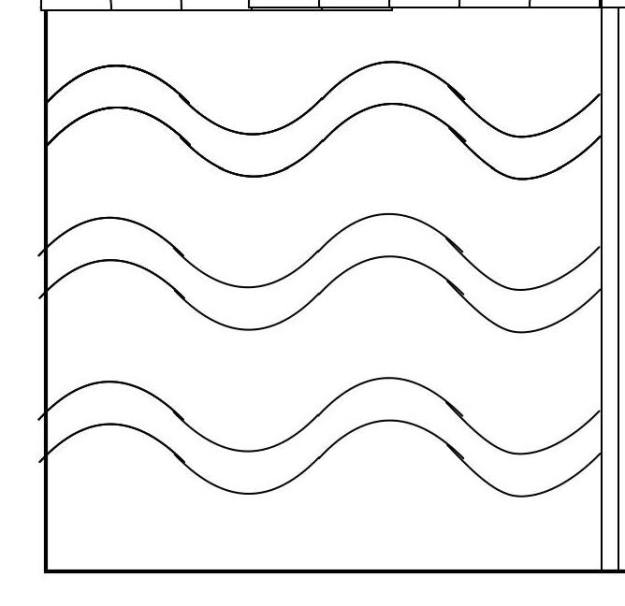
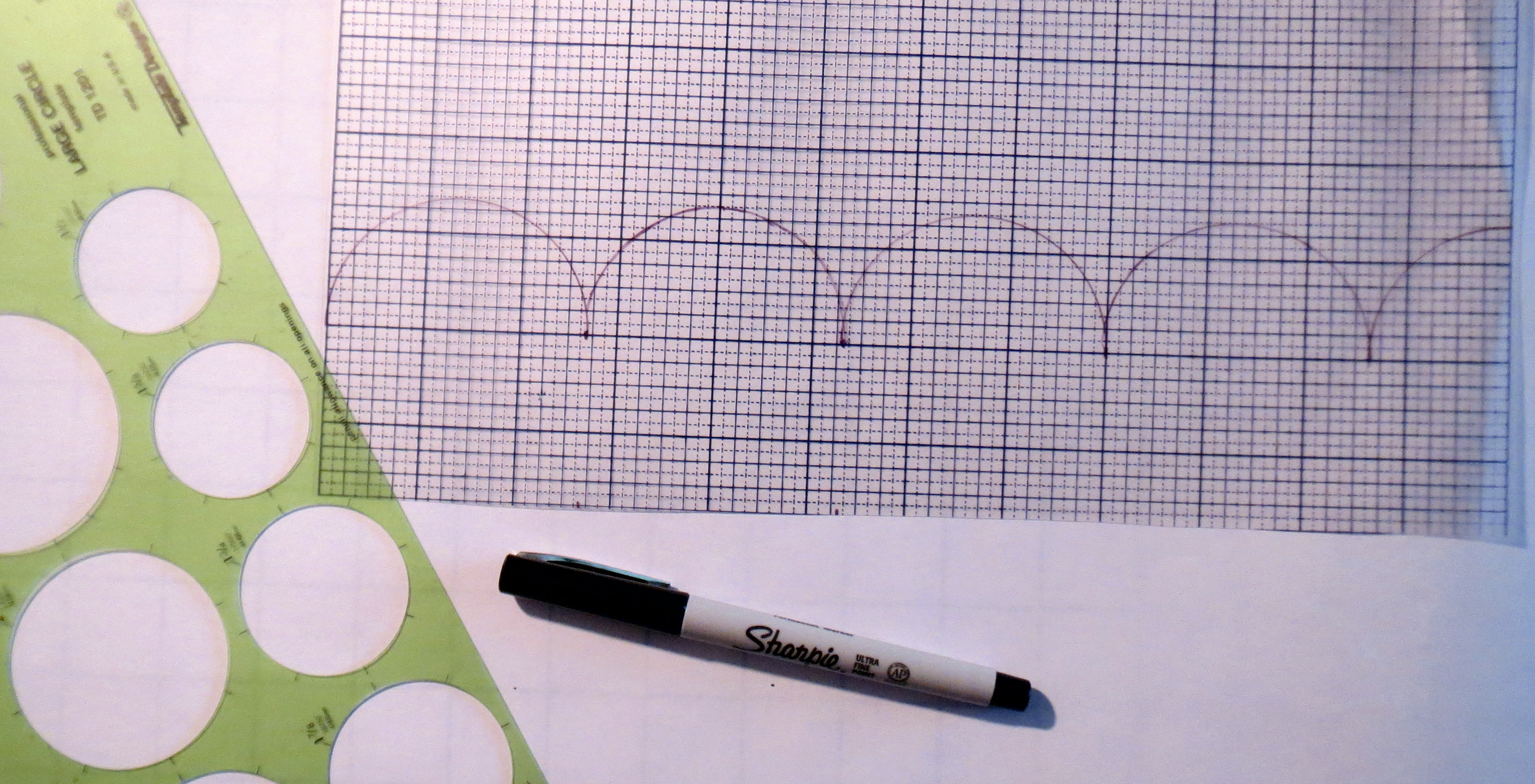
The tools needed are a Sharpie or other non-smearing pen, template plastic, and some sort of circle. In the photo I show a drafting circle template that I often use, but cans, plates, CDs – anything round can be used. For this wavy line, you could even draw it free hand, just using the grid lines on the plastic as a reference.
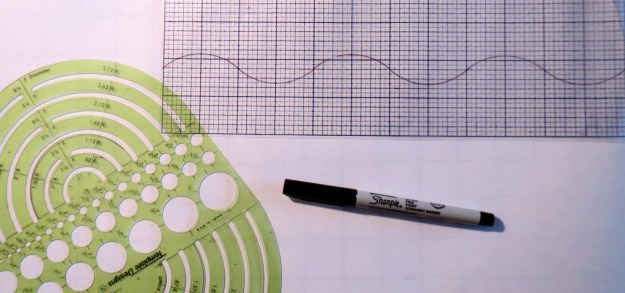
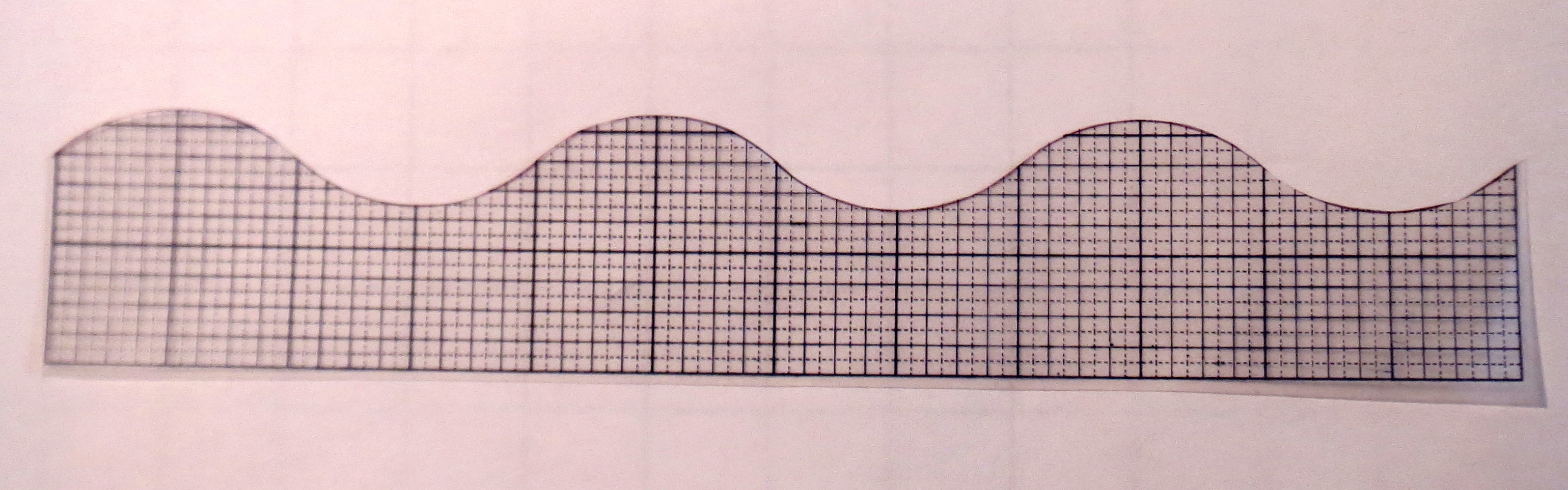
Once the pattern is drawn, cut it out with scissors as shown below. Feel the edge and if necessary smooth it out with sandpaper or an emery board.
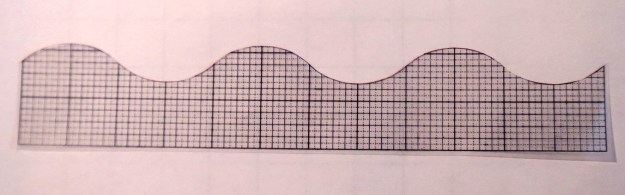
Use the template to draw a wavy line. Space the lines as you wish. I like to make two lines about a half inch apart, then move down about 1 1/2 inches and make two more lines. Repeat until the space is filled. The waves also look great when placed on the diagonal.
The second template is for clamshell quilting. Basically clamshells are just staggered half circles. I used a different circle template for this, but otherwise the tools are the same. The pattern is shown here:
And the tools and marked template are shown below:
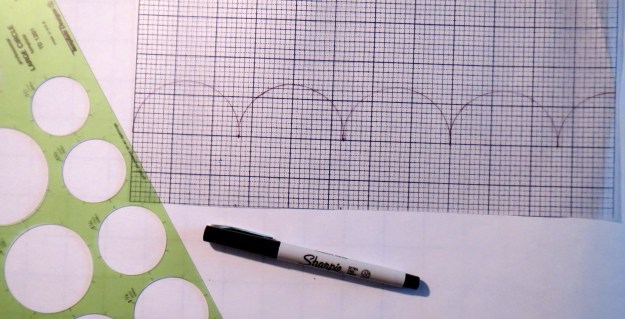
Select the right size circle to divide your space evenly – for example a 9 inch block would work well with 3 inch circles. Cut out the half circles, making your template one half circle longer than the space you need to fill so you can stagger the patterns as shown on the drawing. Trim enough of a gap between half circles so you can fit your marking pen into the notch.
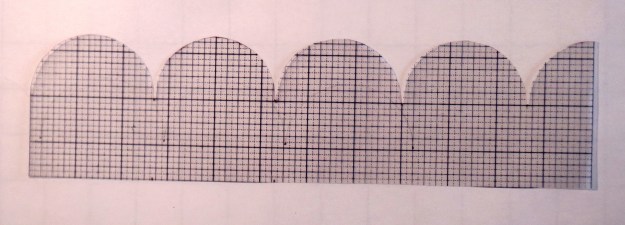
If possible, mark your quilt top before you sandwich it with the batting and backing. Use a marking pen and trace along the top of the template. A water soluble or iron-away marker can be used; check with your local quilt shop for recommended brands.
Many other shapes can also be made from template plastic – circles, flowers, butterflies, etc. Marking your quilt will be quick and easy once you have a template!
Quilting with Decorative Stitches and Echo Quilting
I was teaching my Beginning Quilting with a walking foot class last weekend. I have reorganized the class to include a sampler, much like the way I reorganized my free motion quilting class. A couple of types of quilting that the students seemed to enjoy the most were the use of decorative stitches and echo quilting.
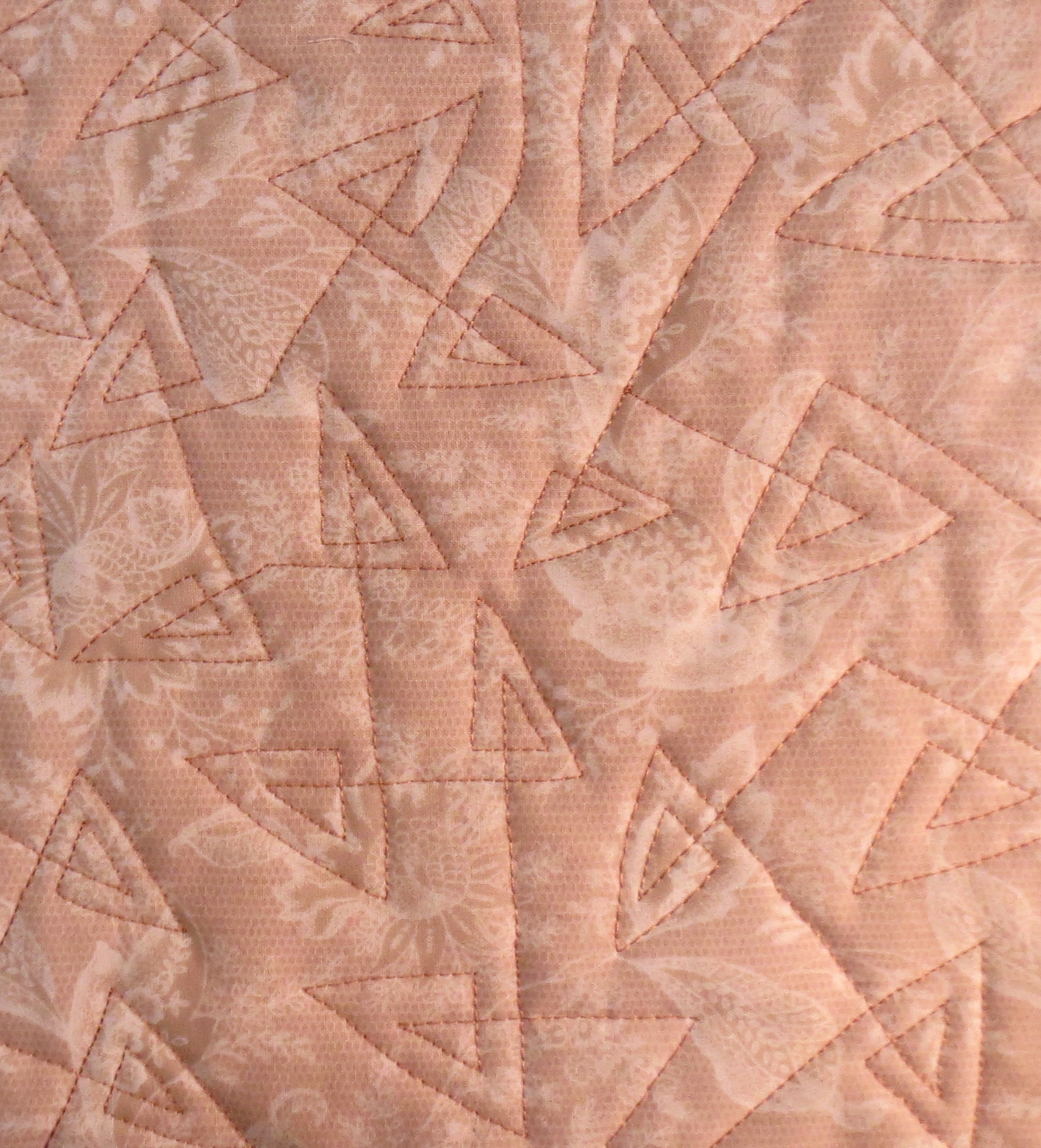
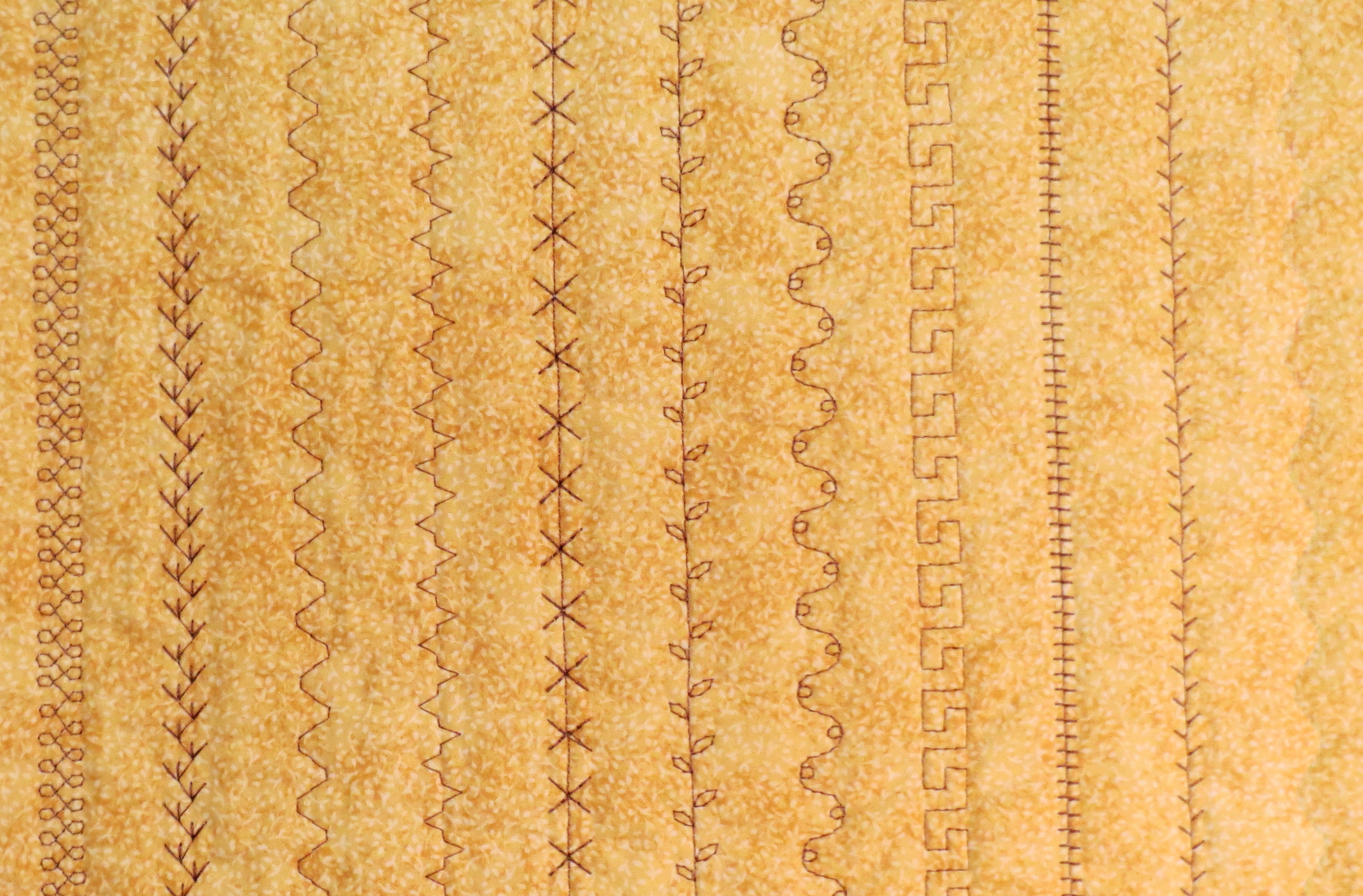
Most of your sewing machine’s decorative stitches, and some of the utility stitches, can be used for quilting. Some times you will need to increase the stitch length to get an attractive look. The photo below shows some of the decorative stitches I like for machine quilting.
And the next photo shows an example of echo quilting around a fairly complicated pattern. Echo quilting is very attractive on a light colored background where the texture of the quilting can show (on the Classes page of this blog, see my photo in the class description of the Beginning Quilting with a Walking Foot class for an even better example). The initial center pattern is marked on the fabric and then the presser foot width is used as a guide to ensure even spacing of the echos.

Echo quilting can be done around a center design or can fill in from a simple pattern on the edges of a block, or both as shown here
When planning the quilting of your next quilt, don’t forget how effective these kinds of quilting with a walking foot can be, especially if you still get stressed out by free motion quilting.
Quilt Shops in Bend, Oregon
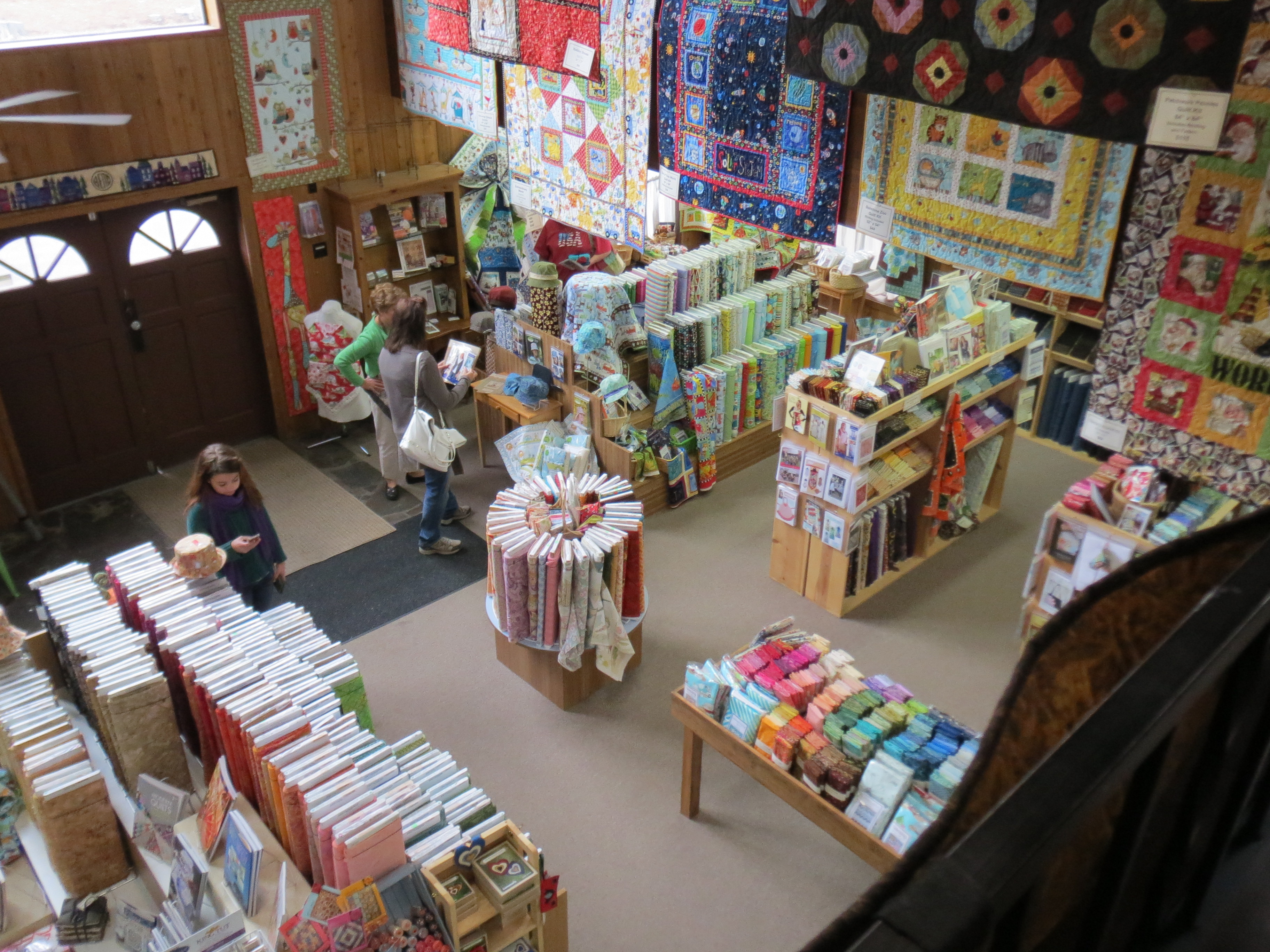
I was in Central Oregon this past weekend for a high school reunion and visited a couple of quilt shops in Bend. They are great shops and well worth visiting if you are in the area. The first shop I saw was Quiltworks (www.quiltworks.com), a lovely shop with a great mezzanine where they have changing quilt exhibits. The photo below was taken looking down at the shop from the mezzanine.
The other shop I visited was BJ’s Quilt Basket (www.bjsquiltbasket.com) , another wonderful shop. BJ’s shares their space with a sewing machine dealer – a nice resource when students have machine problems during a class. The photo below shows some of their space.
Both shops have a great selection of fabrics. There are several other quilt shops in Bend and the neighboring towns, but I didn’t have time to visit them. Maybe I will get back there sometime soon.
Caryl Bryer Fallert-Gentry
We local quilters up here on the Olympic Peninsula are very pleased that Caryl Bryer Fallert (now Gentry) is joining us at least part time due to having married a local man. She treated us to a reception and exhibition of some of her quilts last week at the Port Townsend Yacht Club. She has a special exhibit in Houston next month, celebrating 30 years of quilting, and these quilts will be part of that exhibit. She used her line of Benertex fabrics for the quilts, and the use of ombre or gradated fabrics is great and I plan to purchase some of them and see what I can do with them. Of course her use of color was, as always, outstanding. And the only word for her free motion quilting, all done with a home sewing machine, is exquisite. She really sets the standard for quality and gives the rest of us motivation to improve our own skills. You can find out more about her art at her website, www.bryerpatch.com .
Ink-li-que project
Last week I experimented with Ink-li-que, which is a technique where the quilt is first quilted and then colored with ink. There are a number of quilt artists who have carried this technique further and are using all kinds of paints to paint their quilts rather than use piecing or applique techniques. At the end of this post I will give you a couple of references where you can get further information if it is of interest to you.
At least one major quilt show (Road to California) has recognized the need for a new competition category, and has added a category called “Painted Surface” to reflect this type of work and yet keep it separate from traditional quilting techniques. In my opinion this is an important distinction and I hope all quilt shows will adopt this new category.
Now back to my modest attempt at Ink-li-que. As you can see in my gallery, I recently started experimenting with Zentangle drawings and enjoyed that process. Susan, a member of my guild, pointed out an article by Sherry Rogers-Harrison on Ink-li-que in American Quilter magazine from a couple of years ago. She commented that it looked like my zentangle work. I decided she was right and I should explore Ink-li-que a little to see if there were some different techniques I could apply to future zentangle quilts.
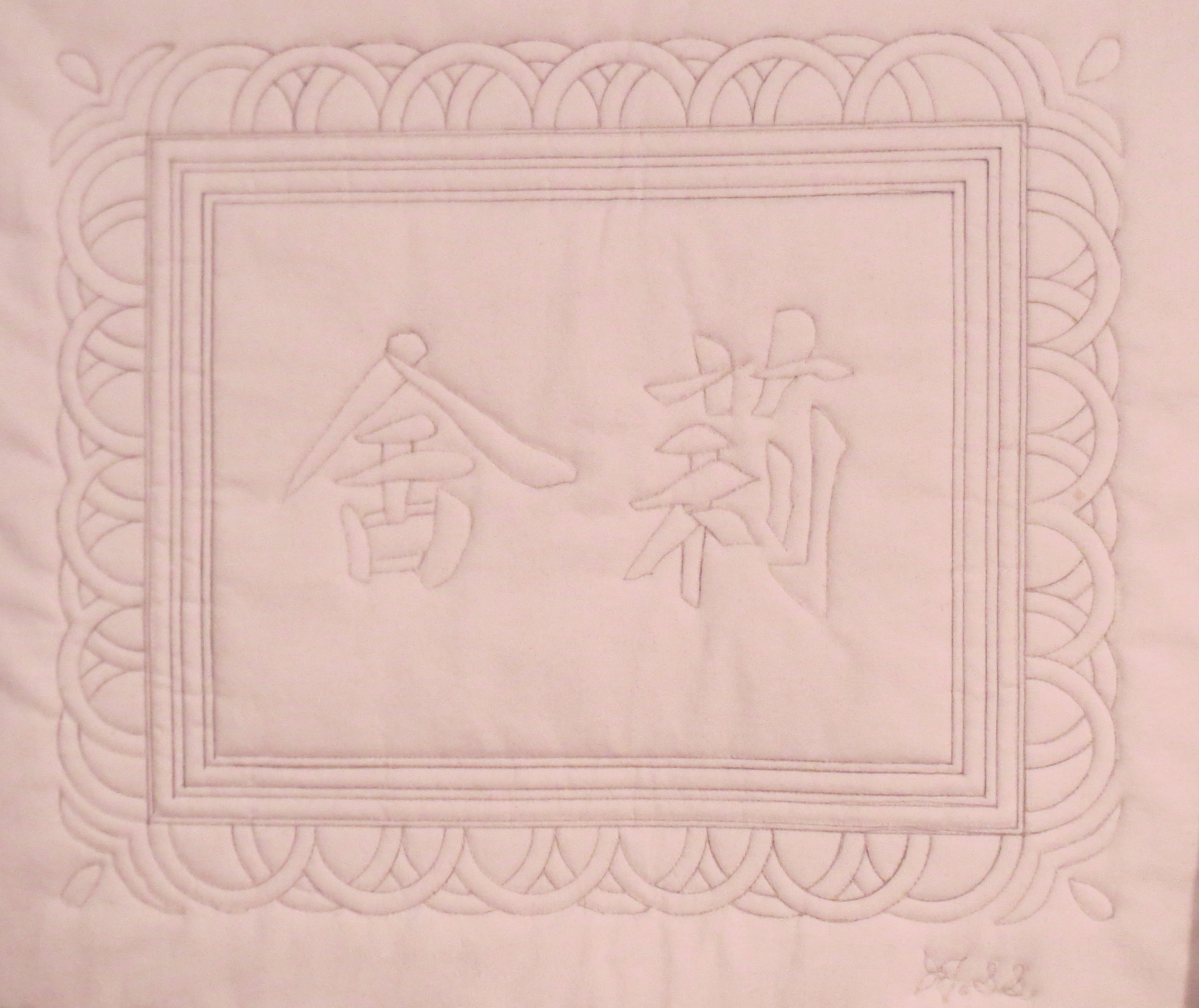
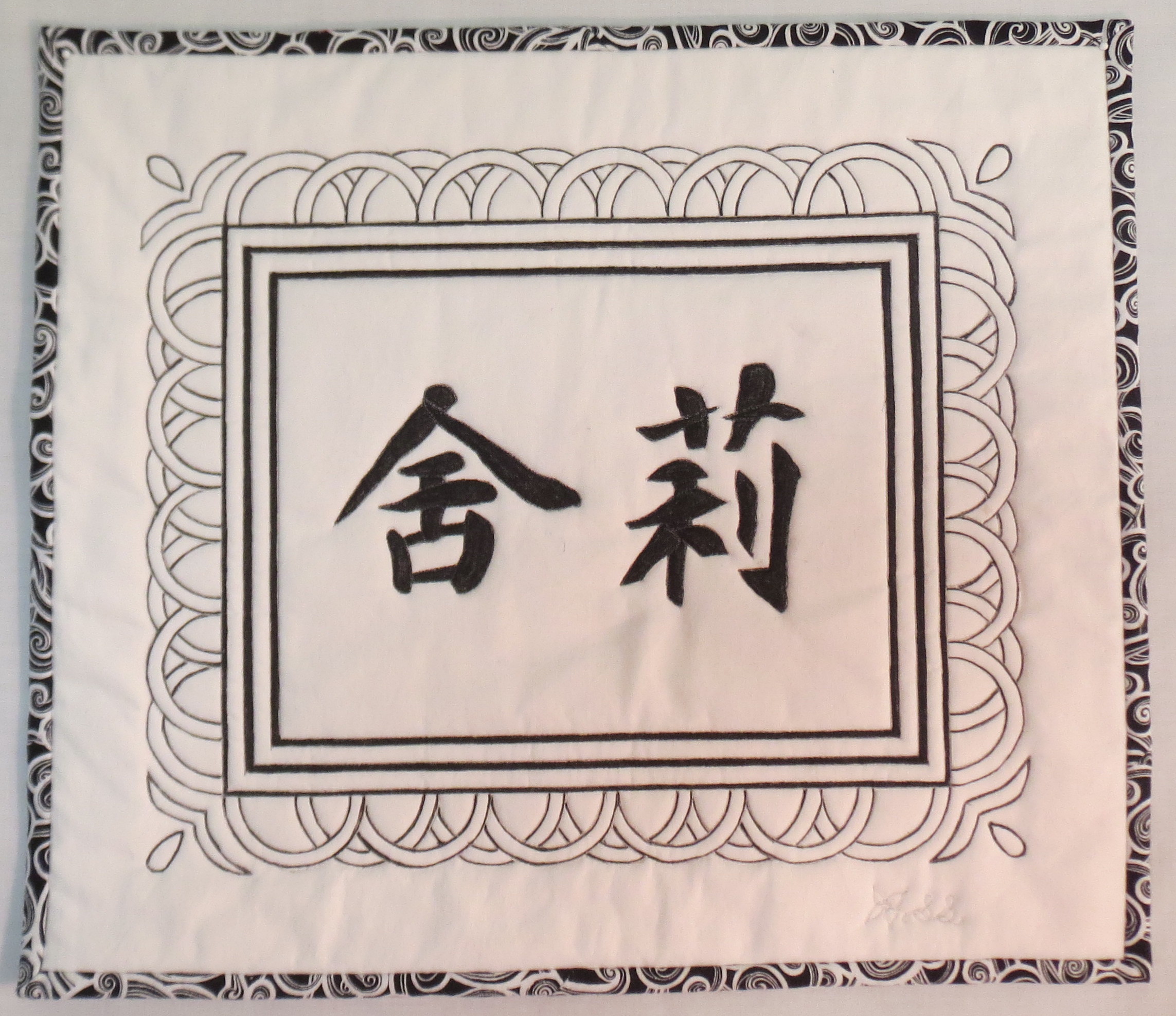
I designed a small quilt in black and white (the central chinese characters came from a book on Chinese calligraphy and are supposed to represent “Shirley”) . Following Sherry’s directions, I used a high thread count fabric (Pimatex) and pre treated it by spraying with Scotchgard and an art fixative. After letting the fabric dry – it was quite stiff – I drew the design on the fabric with a pencil. I sandwiched the quilt and stitched on the drawn lines with a fine white thread. I did some free motion but a lot of the stitching was done with a walking foot, since I knew the straight lines would come out straighter that way. Then I used a Gelly Roll pen to draw on top of the quilting threads, and used Pigma pens to fill in the large black areas. You can see the quilted but not inked version below with the inked version underneath.
Although this came out OK, I think I would prefer it done more traditionally – using a heavy black thread and/or satin stitching for the lines, and with the characters done in regular applique. There is a flatness to the ink that doesn’t appeal to me for this formal a design. Interesting, since I don’t have the same reaction to the zentangle form, which I like a lot.
There are many quilt artists who have carried this form to astonishing lengths and achieved beautiful results. Sherry Rogers-Harrison has some beautiful quilts at her website, www.sewfarsewgood.org . She also has made some you tube videos showing the techniques. Leah Day, another talented quilter, also has videos showing similar techniques. You can see these through her website, www.DayStyleDesigns.com . Or just do a search for either Sherry or Leah on youtube or with your favorite search engine. With use of rich metallic paints and clever highlighting, they can really make a quilt glow.